Articles · The numbers
How Many People Escaped the Berlin Wall?
The figure of 5,075 comes from a West Berlin police count. Here is where it comes from, how it fell year by year, and what several hundred documented escapes add to it.
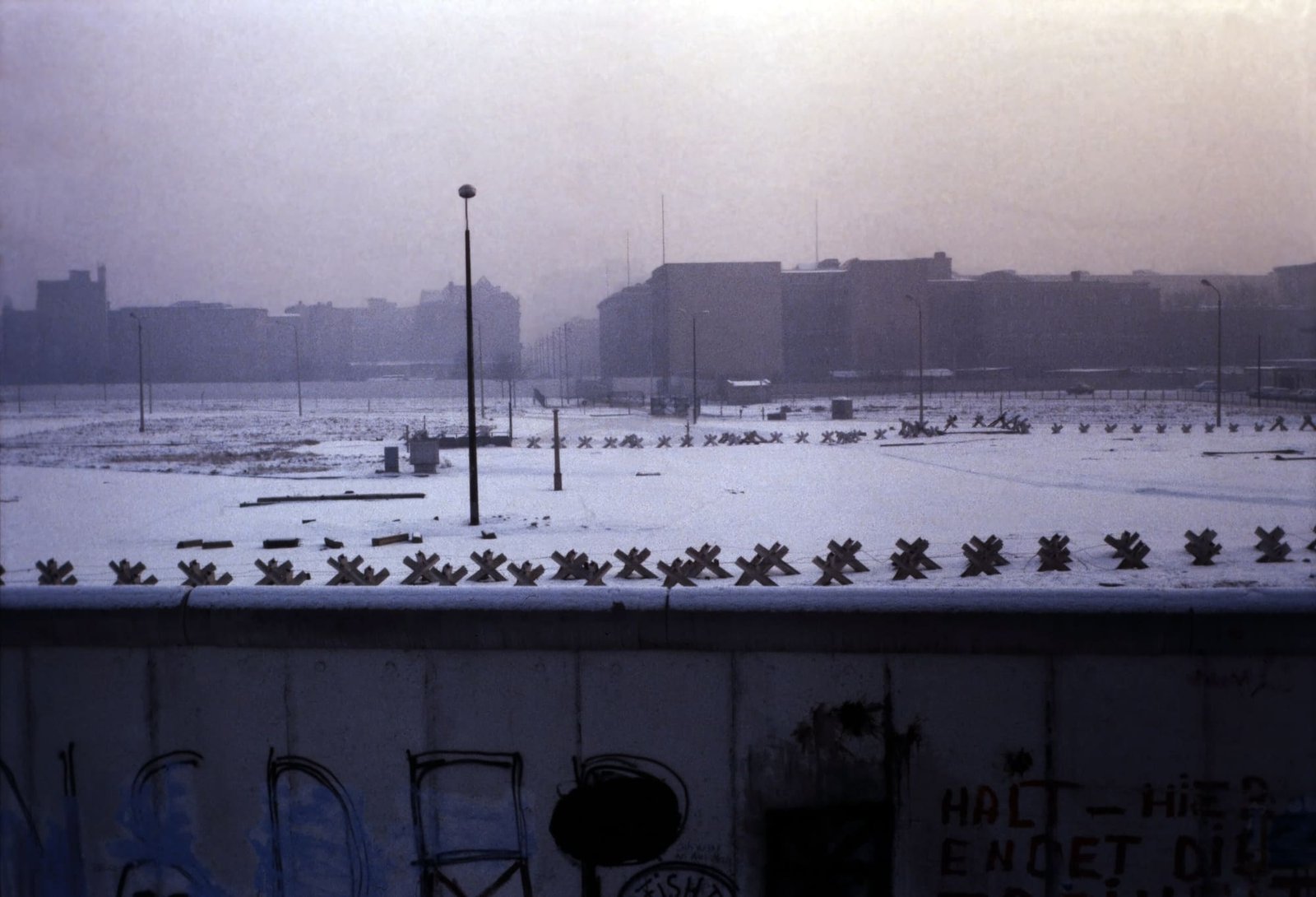
In the twelve months after the border was sealed on 13 August 1961, the West Berlin police registered 2,305 people who had made it through the new barriers. In the twelve months to 13 August 1986 they registered ten.2
Those two numbers tell most of the story. The Wall closed the way out slowly: over the following years wire became concrete, and the border strip filled with lights, fences and patrols.5 This article traces the headline figure of 5,075 to its source, follows it year by year, and sets it beside what this site's own records of individual escapes show.
- 5,075people escaped through the barriers into West BerlinBerlin, 13 Aug 1961 – end of 1989. West Berlin police count.Chronik der Mauer
- 574of them were GDR soldiers and policeBerlin, same count.Chronik der Mauer
- 140people died at the Berlin WallBerlin, 1961–1989. Research findings of 2017.Chronik der Mauer
- 33,755political prisoners bought free by West GermanyWhole GDR, from 1963.Bundesstiftung Aufarbeitung
The short answer: at least 5,075
Between the building and the fall of the Wall, at least 5,075 citizens of the GDR escaped through the border barriers into West Berlin. How many tried and failed is still not known.1
The 5,075 is a police figure. In a table titled "Mauerstatistik nach dem 13.8.1961, Stand: 31.12.1989", the West Berlin police counted the escapes over the barriers in Berlin that they had registered, from 13 August 1961 to the end of 1989. They called the people who got through Sperrbrecher, barrier-breakers. The count includes 574 members of the GDR's "armed organs": soldiers, border troops and police.2
It is a minimum: anyone who crossed without being registered by the police is missing from it.
The number is small beside what came before. Chronik der Mauer puts the exodus from the Soviet zone and the GDR to West Germany at more than two and a half million people between 1949 and mid-1961.1 The Berlin Wall Foundation says the GDR had lost a sixth of its population, at least four million people, by August 1961.4 The Bundesstiftung Aufarbeitung's dossier also speaks of a sixth, but of "over three million" by 13 August 1961.3 The three figures start at different dates and count on different bases, which is why they differ.
Year by year: the collapse after the first year
The same police data, published by Chronik der Mauer from Lapp and Ritter's book Die Grenze, breaks the Berlin escapes down by year. Two details matter when reading it. Each "year" runs to 13 August, so the first bar covers 13 August 1961 to 13 August 1962. And the series has no figures for 1987 and 1988.2
Show the numbers
| Year to 13 August 1962 | 2,305 |
|---|---|
| Year to 13 August 1963 | 640 |
| Year to 13 August 1964 | 297 |
| Year to 13 August 1965 | 259 |
| Year to 13 August 1966 | 102 |
| Year to 13 August 1967 | 87 |
| Year to 13 August 1968 | 46 |
| Year to 13 August 1969 | 46 |
| Year to 13 August 1970 | 62 |
| Year to 13 August 1971 | 45 |
| Year to 13 August 1972 | 49 |
| Year to 13 August 1973 | 95 |
| Year to 13 August 1974 | 55 |
| Year to 13 August 1975 | 46 |
| Year to 13 August 1976 | 61 |
| Year to 13 August 1977 | 159 |
| Year to 13 August 1978 | 146 |
| Year to 13 August 1979 | 93 |
| Year to 13 August 1980 | 88 |
| Year to 13 August 1981 | 66 |
| Year to 13 August 1982 | 44 |
| Year to 13 August 1983 | 38 |
| Year to 13 August 1984 | 46 |
| Year to 13 August 1985 | 24 |
| Year to 13 August 1986 | 10 |
| Year to 13 August 1987 | no figure |
| Year to 13 August 1988 | no figure |
| Year to 13 August 1989 | 32 |
West Berlin police statistics, via Chronik der Mauer. Total to the end of 1989: 5,075.
After 2,305 in the first year, the count fell to 640, then 297, then 259, then 102 in the year to August 1966. From the late 1960s it mostly stayed below a hundred a year, with a rise to 159 and 146 in the years to August 1977 and 1978. It reached 10 in the year to August 1986, and 32 in the year to August 1989.2
Add up the yearly figures from 1962 to 1989 and you get 4,941, not 5,075. The gap comes from the missing years and the different cut-off dates: the yearly series stops at 13 August, the total runs to the end of 1989.2
For comparison, the same table counts 8,507 barrier-breakers across the inner-German and Berlin borders together in August to December 1961 alone, and 40,101 from 1961 to 1988.2 The Bundesstiftung Aufarbeitung's dossier gives a much larger figure for 1961: over 50,000 refugees who got through the "still leaky" barriers by the end of that year.3 The dossier does not say what it counts, so the two figures cannot be compared directly.
The site's own records show the same collapse in miniature. Most of what they document from 1961 happened in the first weeks, when people jumped from windows on Bernauer Straße, swam canals and climbed the wire. On the first evening about eighteen people crossed the Teltow Canal, and two young people crossed the Britzer Zweigkanal in an inflatable dinghy. Nine days later Ida Siekmann died after jumping from her window at Bernauer Straße 48.
Show the numbers
| August 1961 | 126 |
|---|---|
| September 1961 | 47 |
| October 1961 | 22 |
| November 1961 | 5 |
| December 1961 | 10 |
How the Wall was hardened
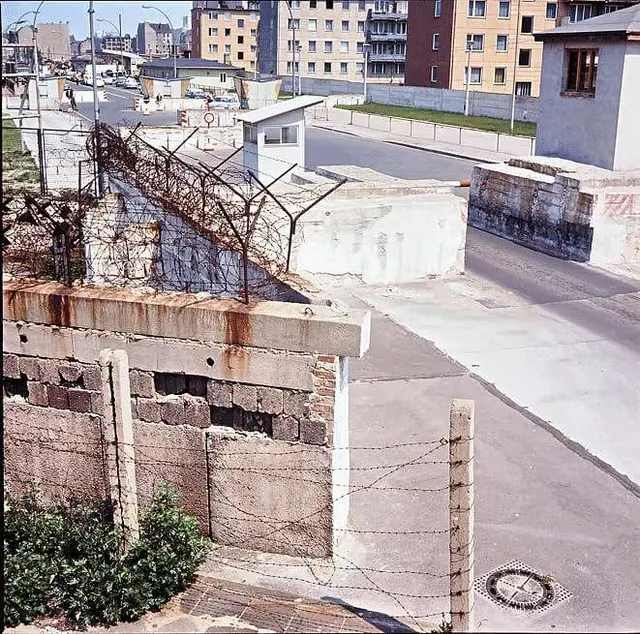
The curve follows the concrete. The first and second generations of the Wall were built from hollow blocks and road slabs. In the second half of the 1960s came a third generation of slab wall, and from the mid-1970s the fourth, the "Grenzmauer-75", made of prefabricated concrete elements 1.20 metres wide and 3.60 metres high. Paths, lighting, electric and electronic fences, dog runs, vehicle barriers and alarm systems were added. By the end of the 1960s or early 1970s, Chronik der Mauer says, the system had become almost insurmountable.5
- 1961The first walls, built of hollow blocks or concrete road slabs. Chronik der Mauer
- Late 1960sA third-generation slab wall follows. By the end of the 1960s or early 1970s the border system has become almost insurmountable. Chronik der Mauer
- 1971From 1971 the Wall is guarded by the 11,500-strong Grenzkommando Mitte. In the city centre, posts stand about 320 m apart by day and 260 m by night. Chronik der Mauer
- Mid-1970sThe fourth-generation 'Grenzmauer 75' goes up: prefabricated segments 3.60 m high and 1.20 m wide. Chronik der Mauer
- 1980The GDR plans 'Grenze 90', with sensors, infrared barriers and automatic searchlights. It was never built. Landesdenkmalamt Berlin
- 1989156.4 km of border around West Berlin: a strip 15 to over 150 m wide, a rear wall or fence, a signal fence and a concrete wall 3.50–4.00 m high. No mines were laid at the Berlin Wall. Chronik der Mauer
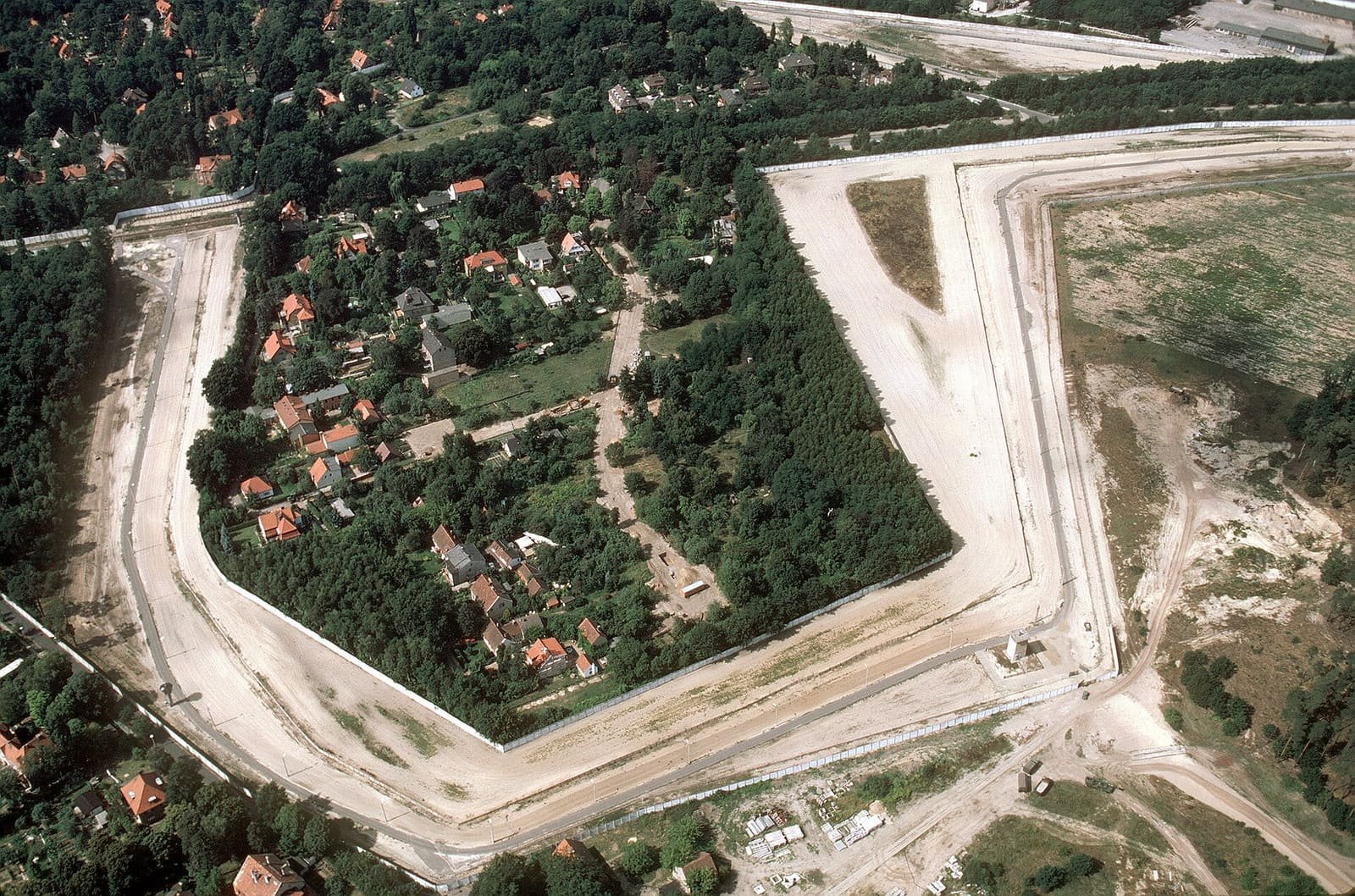
By 1989 the Wall was 156.4 kilometres long. The border strip was between 15 and more than 150 metres wide and the wall itself 3.50 to 4.00 metres high. Unlike the inner-German border, the Berlin Wall had no mines.1 The Landesdenkmalamt gives the strip's normal width as about 70 metres, extending to 500 metres at exposed places such as Potsdamer Platz.6
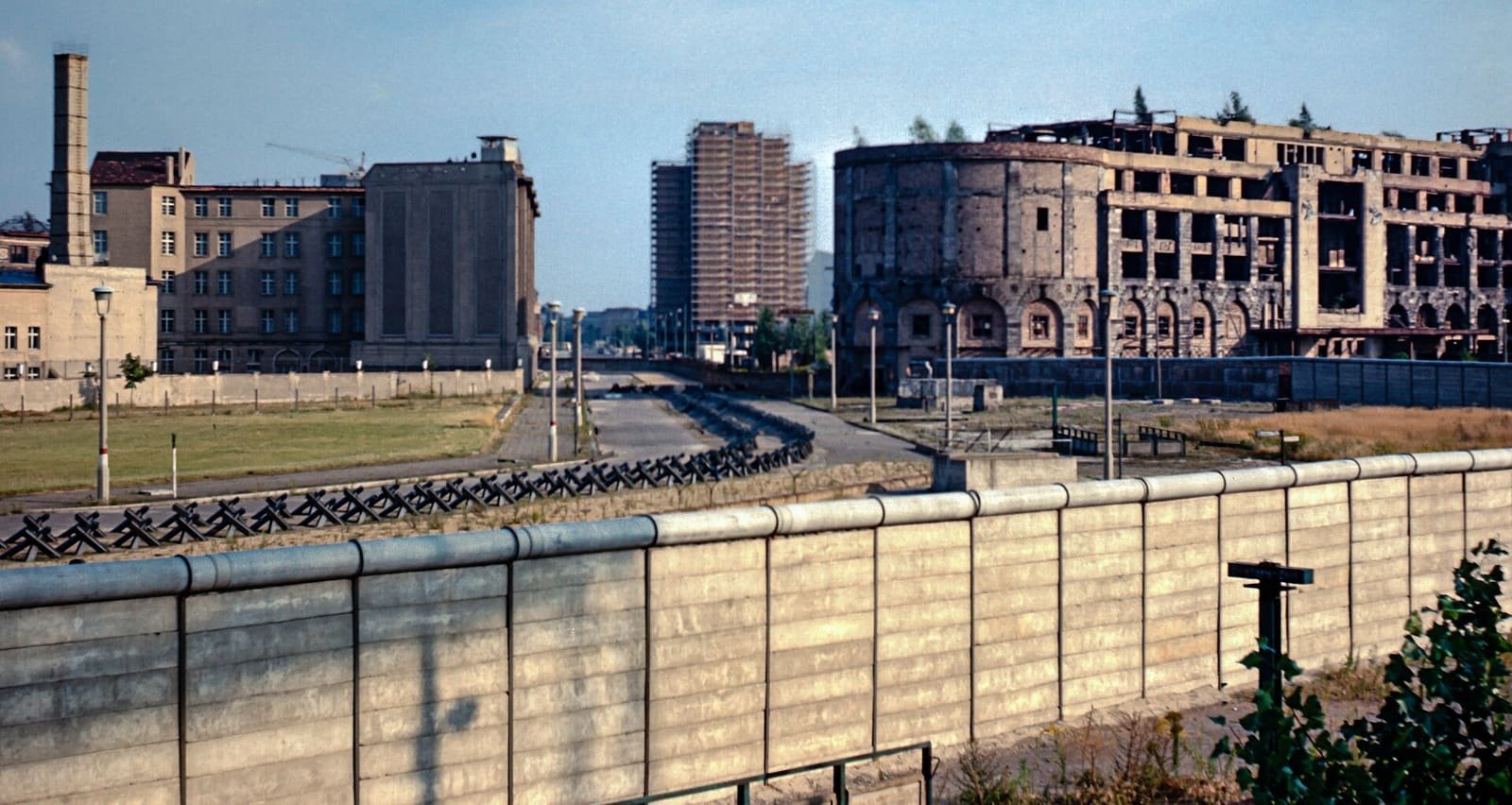
From 1971 the border was guarded by the Grenzkommando Mitte, 11,500 men strong. In the city centre the posts were about 320 metres apart by day and 260 metres by night.1 In 1980 the GDR planned a further stage, "border fortification 90", with sensors, infrared barriers and automatic lights. It was never built.6
Gaps were closed as they were found. After escape helpers including Boris Franzke brought out up to 20 people through a tunnel under Heidelberger Straße in April 1963, the GDR dug an anti-tunnel trench along the street. In May 1970 a tunnel dug from Bernauer Straße 80 was exposed by the Stasi, after a tip-off and listening probes, before anyone could use it. The story of the tunnels has its own article.
Soldiers and police who ran: the 574
The 574 members of the GDR's armed organs are included in the 5,075, and the yearly police series counts deserters too.2
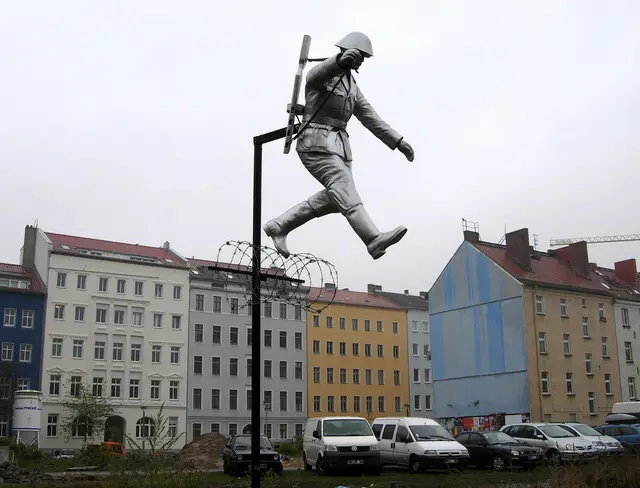
On this site, border-guard defection is the second most common method after climbing, and about two thirds of those records fall in 1961–62. The best known is Conrad Schumann, who jumped the wire at Bernauer Straße on 15 August 1961. Less famous are the four riot-police cadets who slipped away from the barrier works at Schönefeld the next day, and the border policeman who deserted in patrol boat G-65 on the Havel later that month. Their stories are told in the border guards who escaped.
The deaths, and the numbers that don't agree
At least 140 people were killed at the Berlin Wall between 1961 and 1989 or died in direct connection with the GDR border regime.1 Of the 140, the Berlin Wall Foundation says 91, most of them people trying to flee, were shot by GDR border soldiers.4
An older figure is still in circulation. The Bundesstiftung Aufarbeitung's dossier says at least 138 people were shot or died in accidents at the Berlin borders while trying to escape.3 The two are worded differently: the 138 counts people shot or killed in accidents while trying to escape, while the 140 covers everyone killed at the Wall or who died in direct connection with the border regime. After 1990, 164 people were convicted over the shootings: 10 SED leaders, 54 military commanders and 100 border soldiers.1
This site records escapes, and its fatal outcomes are the attempts where someone died. The people behind the 140 have their own record at Victims of the Wall, which explains the counts in How many people died at the Berlin Wall? and the rules on firearms in the shoot-to-kill order.
Failure was far more common than death. The same dossier says about 75,000 escape attempts failed in the same period, without saying whether that covers Berlin alone or the whole GDR, and says that in the 1980s about 80 per cent of would-be escapers were arrested before they even reached the border. From 1963 West Germany bought 33,755 political prisoners out of the GDR.3 The buy-outs, at least, are a GDR-wide figure, not a Berlin one.
What the documented escapes show
This site holds around 520 sourced escape records, and in the events where a source gives a number, about 800 people reached the West. That is a fraction of the 5,075. The records are useful for something the police total cannot show: how people escaped, where, and how often it worked.
- Reached the West
- Some got through
- Stopped
- Killed
Show the numbers
| Year | Reached the West | Some got through | Stopped | Killed | All |
|---|---|---|---|---|---|
| 1961 | 178 | 8 | 12 | 12 | 210 |
| 1962 | 22 | 9 | 9 | 13 | 53 |
| 1963 | 11 | 1 | 9 | 7 | 28 |
| 1964 | 13 | 2 | 4 | 7 | 26 |
| 1965 | 9 | 0 | 3 | 9 | 21 |
| 1966 | 4 | 1 | 4 | 6 | 15 |
| 1967 | 0 | 0 | 2 | 2 | 4 |
| 1968 | 3 | 1 | 1 | 3 | 8 |
| 1969 | 1 | 0 | 3 | 3 | 7 |
| 1970 | 0 | 0 | 2 | 4 | 6 |
| 1971 | 2 | 1 | 5 | 2 | 10 |
| 1972 | 1 | 1 | 4 | 1 | 7 |
| 1973 | 2 | 1 | 5 | 3 | 11 |
| 1974 | 0 | 0 | 5 | 1 | 6 |
| 1975 | 2 | 0 | 3 | 2 | 7 |
| 1976 | 1 | 1 | 2 | 0 | 4 |
| 1977 | 1 | 1 | 2 | 2 | 6 |
| 1978 | 4 | 0 | 0 | 0 | 4 |
| 1979 | 2 | 0 | 1 | 0 | 3 |
| 1980 | 2 | 0 | 1 | 2 | 5 |
| 1981 | 0 | 0 | 3 | 2 | 5 |
| 1982 | 2 | 0 | 2 | 0 | 4 |
| 1983 | 3 | 0 | 3 | 1 | 7 |
| 1984 | 1 | 0 | 3 | 1 | 5 |
| 1985 | 2 | 0 | 0 | 0 | 2 |
| 1986 | 11 | 2 | 6 | 2 | 21 |
| 1987 | 6 | 0 | 3 | 1 | 10 |
| 1988 | 8 | 1 | 3 | 0 | 12 |
| 1989 | 3 | 1 | 10 | 3 | 17 |
About half of the documented events fall in 1961 and 1962. The charts below split them into four periods.
| Method | 1961–62 | 1963–69 | 1970–79 | 1980–89 |
|---|---|---|---|---|
| Over the wall | 73 | 46 | 26 | 36 |
| Guards who fled | 46 | 12 | 4 | 8 |
| Window jumps | 61 | 1 | – | – |
| Swimming | 29 | 12 | 3 | 9 |
| Driving through | 15 | 7 | – | 18 |
| Hidden in vehicles | 1 | 12 | 15 | 3 |
| Tunnels | 18 | 7 | 4 | 1 |
| False papers and disguises | 11 | 4 | 7 | – |
| By train | 4 | 5 | 2 | 4 |
| Aircraft and balloons | 1 | 1 | 2 | 7 |
| By boat | 3 | 1 | 1 | 1 |
| Ziplines and cables | 1 | 1 | – | 1 |
Methods rose and fell with the border. All but one of the window jumps on this site happened in 1961–62. Hidden-vehicle escapes through the checkpoints become common from 1964, among them the fifteen people behind pig carcasses at Heinrich-Heine-Straße in 1964. In the 1980s vehicle breakthroughs come back, such as the gravel truck through Checkpoint Charlie in 1986, along with aircraft like the Bethke brothers' microlights. The strangest of these are collected in the most ingenious escapes.
Show the numbers
| 1961–62: 217 of 263 events | 83% |
|---|---|
| 1963–69: 46 of 109 events | 42% |
| 1970–79: 20 of 64 events | 31% |
| 1980–89: 42 of 88 events | 48% |
More than four in five of the documented events in 1961–62 succeeded fully or partly. In the 1970s it was under a third. The share rises again in the 1980s, but treat that with care: which late attempts made it into newspapers and archives shapes the sample.
- Reached the West
- Some got through
- Stopped
- Killed
- Over the wall18183 reached the West · 14 some got through · 39 stopped · 45 killed
- Guards who fled7059 reached the West · 3 some got through · 2 stopped · 6 killed
- Window jumps6252 reached the West · 3 some got through · 3 stopped · 4 killed
- Swimming5323 reached the West · 3 some got through · 4 stopped · 23 killed
- Driving through4021 reached the West · 1 some got through · 17 stopped · 1 killed
- Hidden in vehicles3110 reached the West · 2 some got through · 18 stopped · 1 killed
- Tunnels3014 reached the West · 4 some got through · 11 stopped · 1 killed
- False papers and disguises2214 reached the West · 8 stopped
- By train156 reached the West · 1 some got through · 4 stopped · 4 killed
- Aircraft and balloons115 reached the West · 4 stopped · 2 killed
- By boat64 reached the West · 2 killed
- Ziplines and cables33 reached the West
Swimming stands out: across the Spree, the canals and the Havel, a large share of documented swims ended in death. Tunnels moved the most people per event, but many tunnel records end in failure.
- Reached the West
- Some got through
- Stopped
- Killed
- Bernauer Straße12381 reached the West · 5 some got through · 28 stopped · 9 killed
- Treptow and Neukölln3924 reached the West · 4 some got through · 6 stopped · 5 killed
- Checkpoint Charlie3216 reached the West · 13 stopped · 3 killed
- The Spree between Kreuzberg and Friedrichshain2713 reached the West · 3 some got through · 3 stopped · 8 killed
- Brandenburg Gate and the Reichstag187 reached the West · 3 some got through · 1 stopped · 7 killed
- Glienicker Brücke and Klein Glienicke1610 reached the West · 1 stopped · 5 killed
- Friedrichstraße station136 reached the West · 2 some got through · 4 stopped · 1 killed
- Invalidenstraße and the Humboldthafen125 reached the West · 3 stopped · 4 killed
- Staaken126 reached the West · 4 stopped · 2 killed
Bernauer Straße has more documented events than any other place on this site, followed by Treptow and Neukölln. The site's nine place areas do not cover the whole Wall, and the outer ring around West Berlin appears only in part. The walking tour article takes you to the main sites.
The biggest single escapes
Most documented escapes on this site involved one to three people. Six of the ten largest were tunnels.
- Tunnel 57 (1964)57
- Tunnel 29 (1962)29
- The Becker Tunnel ("Tunnel 28") (1962)28
- The last train to freedom (1961)25
- A second tunnel from Heidelberger Straße 35 – Boris Franzke's last (1963)20
- About eighteen people cross the Teltow Canal on the first evening (1961)18
- Fifteen people behind the pig carcasses (1964)15
- The excursion ship "Friedrich Wolf" (1962)14
- The Aagaard Tunnel (1963)13
- The Pensioners' Tunnel (Thomas Tunnel) (1962)12
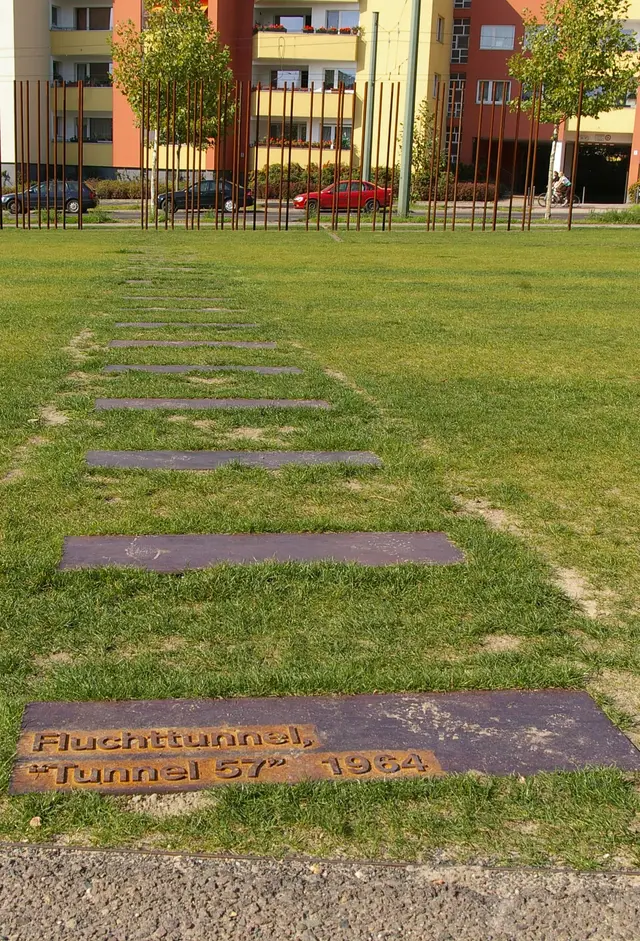
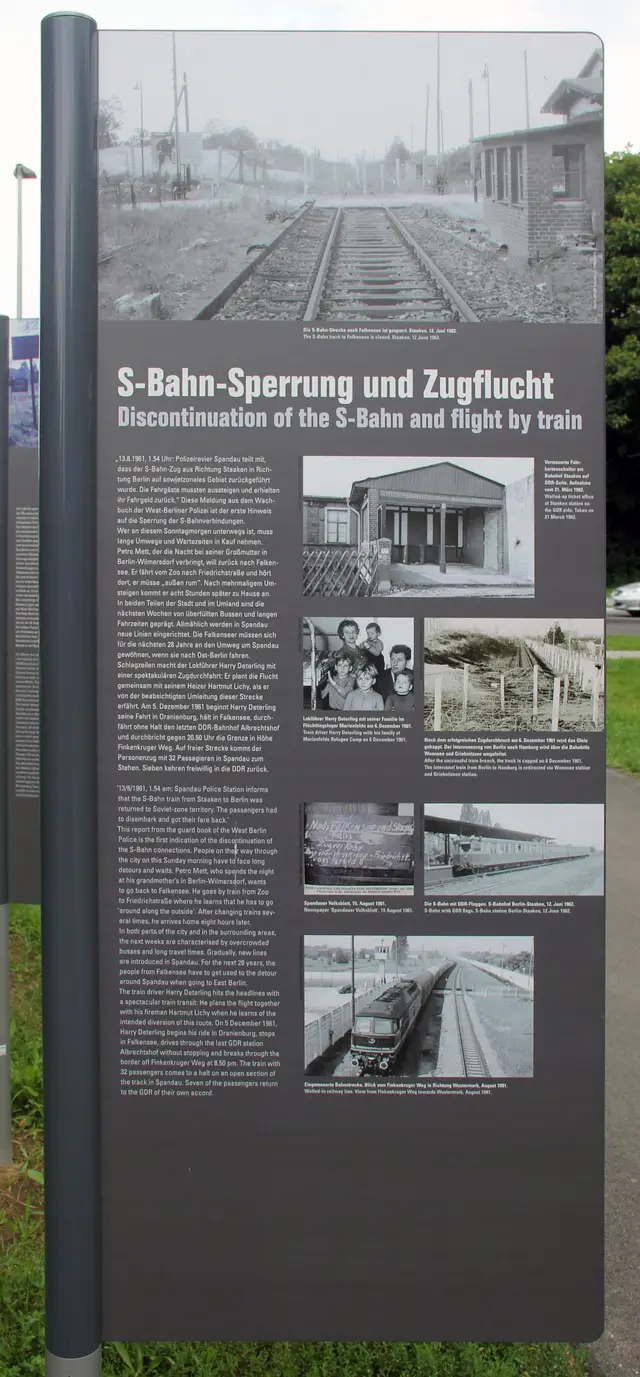
Tunnel 57 brought 57 people under Bernauer Straße on 3–4 October 1964, and ended with the death of the border soldier Egon Schultz. Tunnel 29 brought out 29 in September 1962, while an American TV crew filmed. Twin brothers dug the Becker tunnel in Glienicke, and 28 people crawled through it in one night in January 1962. On 5 December 1961 Harry Deterling drove a passenger train through the terminus at Albrechtshof into Spandau; Chronik der Mauer counts 25 people who stayed in the West, while a Stasi report gives about 30 passengers plus the driver and fireman. In June 1962, 13 young East Berliners and a baby took the excursion ship "Friedrich Wolf" into the Landwehrkanal under fire.
Many of the large escapes relied on people in the West who dug, drove and forged. The escape helpers tells their side.
1989: failing to the end
The records on this site for 1989 are mostly failures. Trucks were driven at the barriers at Stolpe, Staaken and Glienicke/Nordbahn, and stopped. On 5 February Chris Gueffroy became the last person shot dead at the Wall, at the Britzer Zweigkanal. On 8 March Winfried Freudenberg crossed into West Berlin in a home-made gas balloon and was killed when it came down in Zehlendorf, the last person to die at the Wall.
A few still got through, like Egbert Bethke, picked up in Treptower Park by his brothers' microlights in May. On 7 October, as East Berlin demonstrated, Gabriela M. was arrested at Brunnenstraße just before midnight.
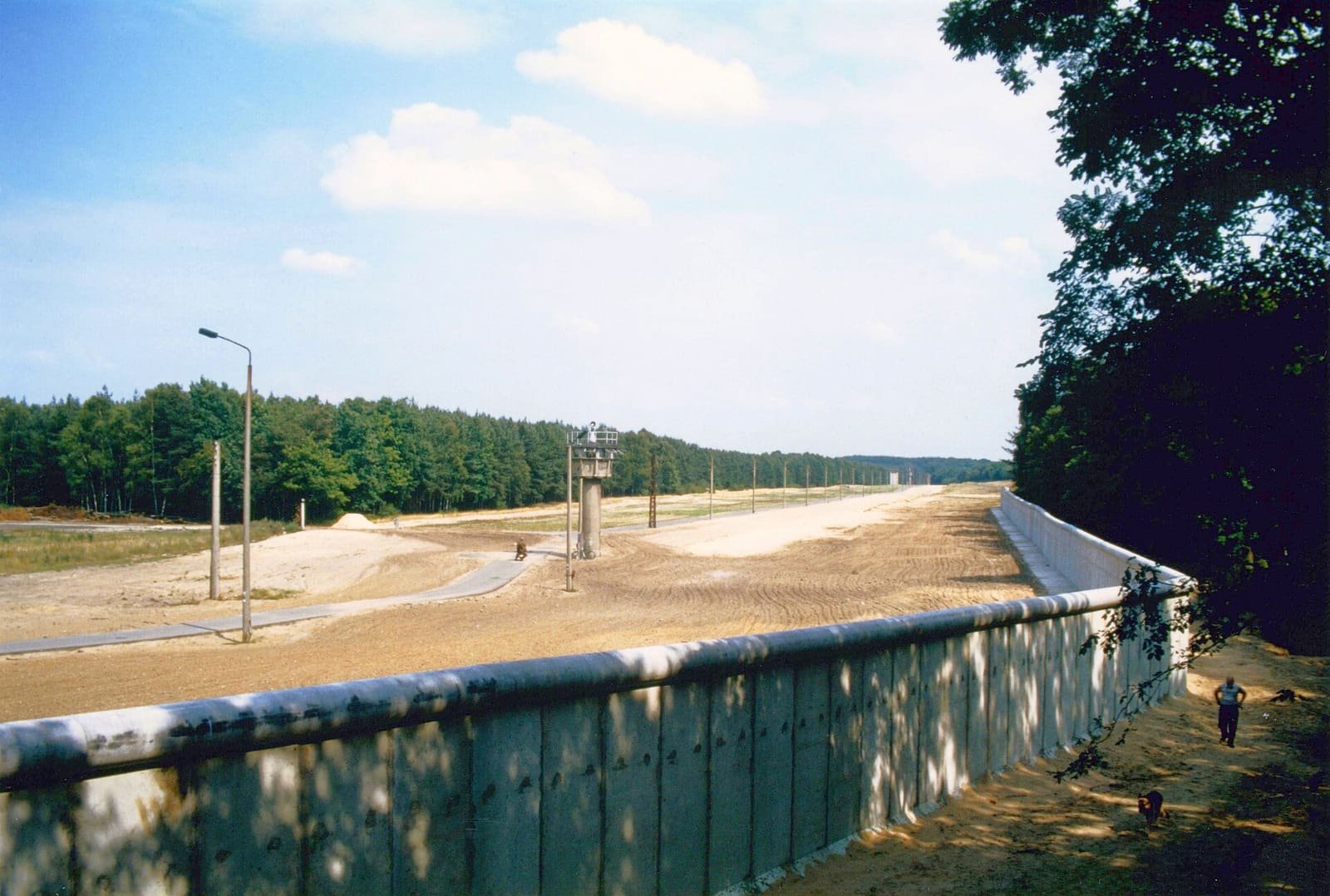
On 9 November 1989 the SED Politburo member Günter Schabowski announced new rules for travel to the West, prematurely, at a press conference broadcast live on East German television. The Wall had stood for 28 years, two months and 28 days.1 The police count runs to the end of that year, and its total stands at 5,075.2
See where it happened
The numbers on this page link to the places behind them. Browse every record by method, year or place, start with 1961, or open the full list of escapes that the charts are built from.
Questions and answers
- How many people escaped the Berlin Wall?
- At least 5,075 East Germans escaped through the border barriers into West Berlin between 13 August 1961 and the end of 1989. The figure is the West Berlin police's count of registered escapes, and it includes 574 members of the GDR's armed forces and police.
- How many people tried to escape the Berlin Wall?
- Nobody knows. Chronik der Mauer states that the number of failed escapes is still not known. The Bundesstiftung Aufarbeitung says about 75,000 escape attempts failed between 1961 and 1989; it does not say whether that figure covers Berlin alone or the whole GDR.
- How many people died trying to escape the Berlin Wall?
- At least 140 people were killed at the Berlin Wall or died in direct connection with the GDR border regime between 1961 and 1989, according to Chronik der Mauer and the Berlin Wall Foundation. An older figure of at least 138 is still quoted elsewhere.
- How many border guards escaped the Berlin Wall?
- The West Berlin police counted 574 members of the GDR's armed forces and police among the 5,075 people who escaped through the Berlin barriers between 1961 and 1989.
- What was the biggest escape from the Berlin Wall?
- Tunnel 57 in October 1964, when 57 people crawled through a 145-metre tunnel under Bernauer Straße over two nights. Among escapes with a firm count, Tunnel 29 in September 1962 and the Becker tunnel in Glienicke in January 1962, with 29 and 28 escapees, come next; some tunnels with disputed counts, such as Heidelberger Straße in March 1962, may have carried more.
Sources
- Häufig gestellte Fragen (FAQ)Chronik der Mauer
- Gelungene Fluchten aus der DDR und Ost-Berlin durch die Grenz-Sperranlagen, 1961–1989 (after Lapp/Ritter, Die Grenze, and the Polizeihistorische Sammlung Berlin)Chronik der Mauer
- Flucht, Fluchthilfe und FreikaufBundesstiftung Aufarbeitung, Zeitzeugenbüro
- The Berlin WallStiftung Berliner Mauer
- Das GrenzsystemChronik der Mauer
- Building and development of the Berlin WallLandesdenkmalamt Berlin
Facts taken from an escape record on this site link to that record, which lists its own sources.
Spotted an error, or know more? Email us a correction or addition
Escapes in this article
3 October 1964 – 5 October 1964
Tunnel 57
57 East Berliners crawled through a 145-metre tunnel dug by West Berlin students under Bernauer Straße. The escape ended in a shoot-out in which border guard Egon Schultz was killed; records opened after 1990 showed the fatal shots came from a fellow GDR soldier.
15 August 1961
Conrad Schumann's leap to freedom
Two days after the border was sealed, 19-year-old border policeman Conrad Schumann jumped over the barbed-wire barrier at Bernauer Straße into West Berlin, dropping his submachine gun as he went.
5 December 1961
The last train to freedom
Locomotive driver Harry Deterling drove a passenger train at speed through the terminus at Albrechtshof and across the border into West Berlin.
9 September 1964
Fifteen people behind the pig carcasses
A trusted meat-transport driver took his wife, their eight children and his brother-in-law's family of five through the Heinrich-Heine-Straße checkpoint hidden among pig carcasses.
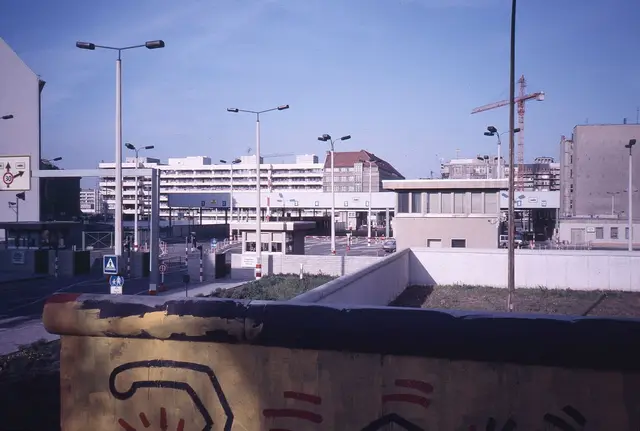
29 August 1986
Gravel truck through Checkpoint Charlie
Truck driver Hans-Joachim Pofahl, his partner and their eight-month-old baby smashed through Checkpoint Charlie in a truck loaded with five tonnes of gravel.
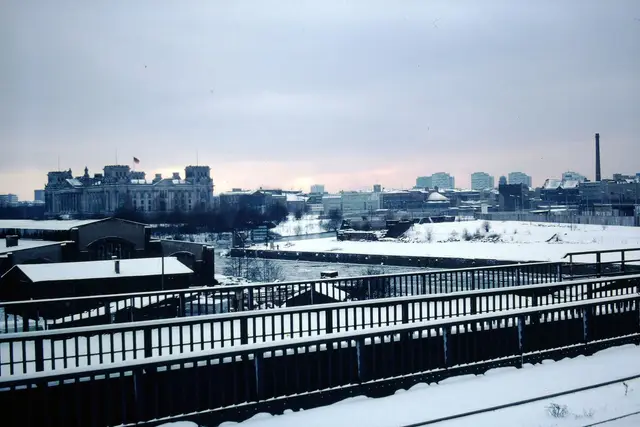
26 May 1989
Ultralight flight from Treptower Park to the Reichstag
Two brothers who had already fled flew ultralight aircraft from West Berlin to Treptower Park at dawn; one landed to pick up their youngest brother Egbert, and both aircraft came down in front of the Reichstag.
More articles
Tunnels
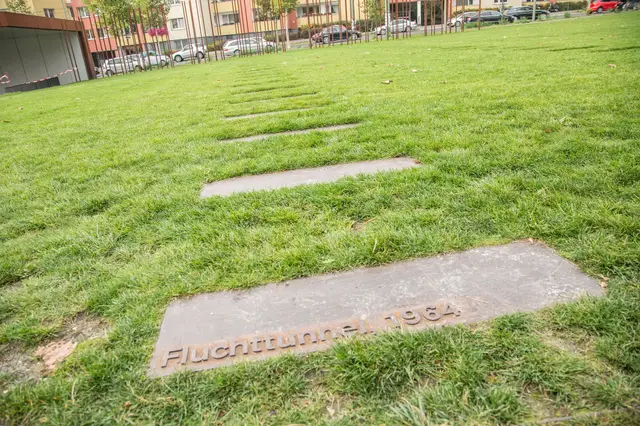
The Tunnels Under the Berlin Wall: Who Dug Them, Who Got Out
Students dug in from the West, families dug out from the East, and the Stasi waited at the far end of many. How the tunnels worked, why most failed, and where you can still see one.
How they did it
The Most Ingenious Berlin Wall Escapes, and How They Worked
A cable from a ministry roof, a train that didn't stop, a bubble car with a person behind the seat. Eleven escapes that were engineered rather than lucky, with the measurements and the places the sources disagree.
Walking tour
Walking the Berlin Wall Escape Routes: A Self-Guided Tour
Two walks and two short add-ons, built from the dated escapes on this site. Each stop says what happened within a few hundred metres, what you can still see there, and how far it is to the next one.