Groß Glienicke, Kladow and the Sacrower See
The lakes and woods on the western edge of Spandau, where the border ran through the middle of the Groß Glienicker See between the GDR village and West Berlin.
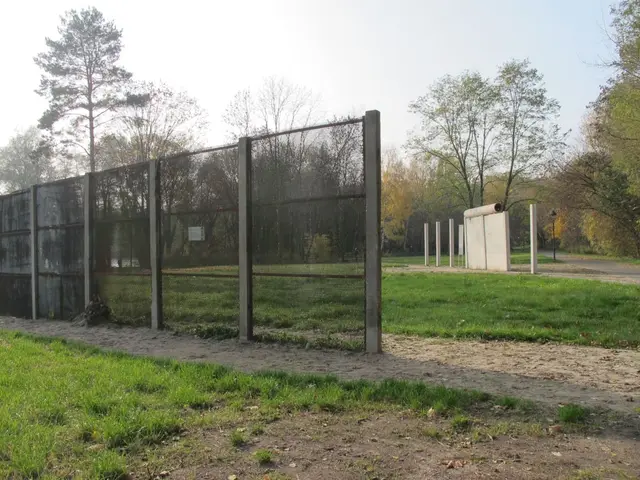
The border ran through the middle of the Groß Glienicker See, and the eastern part of Groß Glienicke belonged to the West Berlin district of Spandau.1 West Berliners liked to bathe in the lake for its clean water, although the GDR border guards watched them constantly.2 On the GDR shore a piece of the first wall of 1961/62, built of concrete and hollow blocks, survives beside the three-metre expanded-metal fence of the 1980s that formed the front barrier; Border Regiment 34 had its barracks in the village.3 Gatow airfield had gone to the British sector after the war in exchange for West-Staaken.2
On 1 September 1961, in the sector of the Groß Glienicke border unit, a farmer, his wife and two children got through the wire, and the guards found it cut, with a horse and cart and three bicycles left behind. In October 1968 two families from Premnitz ordered 110 bottles of hydrogen for home-made balloons; when the balloons would not fill, five of them climbed the fences in thick fog, and one father was shot and caught at the last fence. Rainer Liebeke drowned in the Sacrower See in 1986 while his friend got across. In July 1987 an 18-year-old on his second solo flight landed a light aircraft at RAF Gatow, and the conscript Jens Bernhardt hid his sleeping partner's ammunition and pulled himself over the steel-mesh fence with metal hooks. In September 1988 two more guards crossed into Kladow on duty.
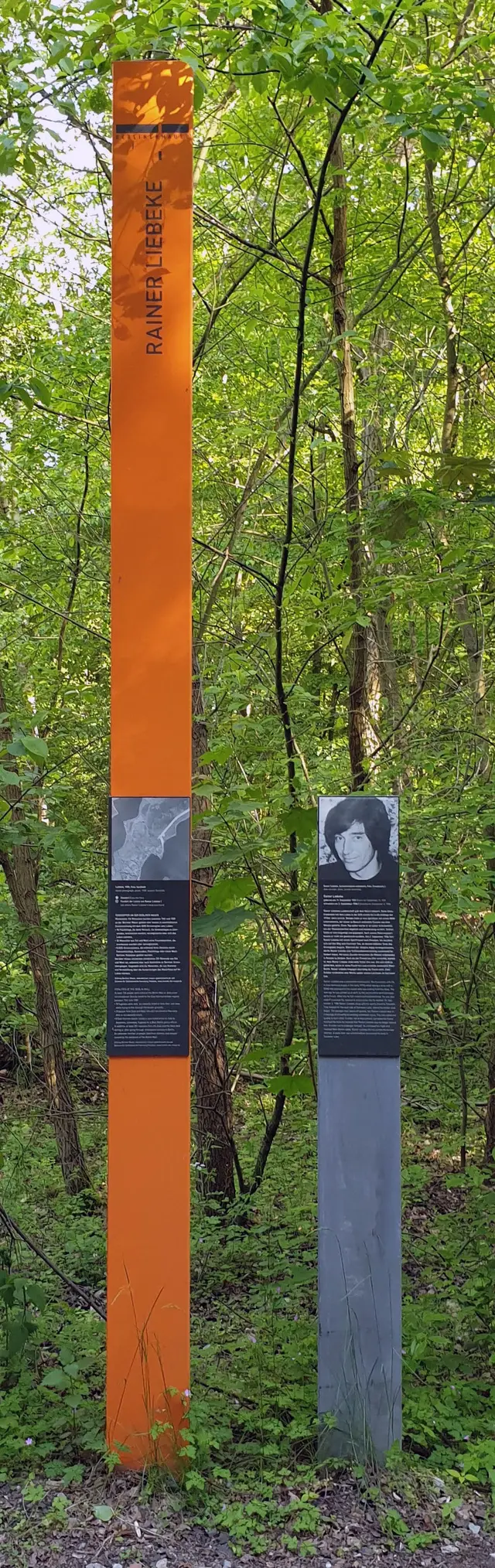
The Wall between Groß Glienicke and Kladow opened at eight in the morning on 24 December 1989.1 A wall re-erected as a monument at the north end of the lake has been a memorial since 2014, near the remains of the manor whose farm buildings the border divided.32 A stele for Liebeke stands on the road between Sacrow and Kladow, and the former strip by the Sacrower See is now a nature reserve.4
Sources for this text
- Mauergedenkstätte am Groß Glienicker SeeReiseland Brandenburg (TMB)
- Mauerweg: Von Wannsee nach Staakenberlin.de
- Mauerreste: Groß GlienickeChronik der Mauer
- Mauerreste: Sacrow – KladowChronik der Mauer
Checked October 2026. Facts taken from an escape record on this site link to that record, which lists its own sources.
6 events: 4 successful escapes and 2 partly successful escapes. At least 14 people reached the West in these events.
1 September 1961
A farmer's family leaves horse, cart and bicycles at the cut wire
On the evening of 1 September 1961 a farmer, his wife and their two children cut through the wire in the Groß Glienicke border sector and reached West Berlin, leaving a horse and cart and three bicycles behind.
20 October 1968
110 bottles of hydrogen and a plastic balloon – then two families climb the fence at Groß Glienicke
Two families from Premnitz ordered 110 bottles of hydrogen to fill home-made plastic balloons. When the balloons would not inflate, they crossed the fences in thick fog: five made it, and the father of one family was shot and caught at the last fence.
3 September 1986
Sacrower See – one friend makes it, Rainer Liebeke drowns
Rainer Liebeke and his friend Dirk K. tried to swim about 500 metres across the Sacrower See; the friend reached West Berlin, but Liebeke, still recovering from a broken collarbone, drowned.
July 1987
Jens Bernhardt waits until his partner falls asleep and climbs the fence into Spandau
In July 1987 a young conscript border guard hid his sleeping tower partner's ammunition at 3 a.m., climbed down and pulled himself over the steel-mesh fence into Spandau with metal hooks. He later spoke publicly about how the shoot-to-kill order was applied.
15 July 1987
18-year-old flies a light aircraft from Potsdam to RAF Gatow
On only his second solo flight, 18-year-old Thomas K. took off in a single-engine plane south of Potsdam and landed at the British airfield in Gatow.
3 September 1988
Two border guards cross from the Potsdam district to Kladow
On 3 September 1988 two members of the GDR border troops on duty in the Potsdam district crossed into Kladow, in the south-west of West Berlin.