Articles · How they did it
The Most Ingenious Berlin Wall Escapes, and How They Worked
A cable from a ministry roof, a train that didn't stop, a bubble car with a person behind the seat. Eleven escapes that were engineered rather than lucky, with the measurements and the places the sources disagree.
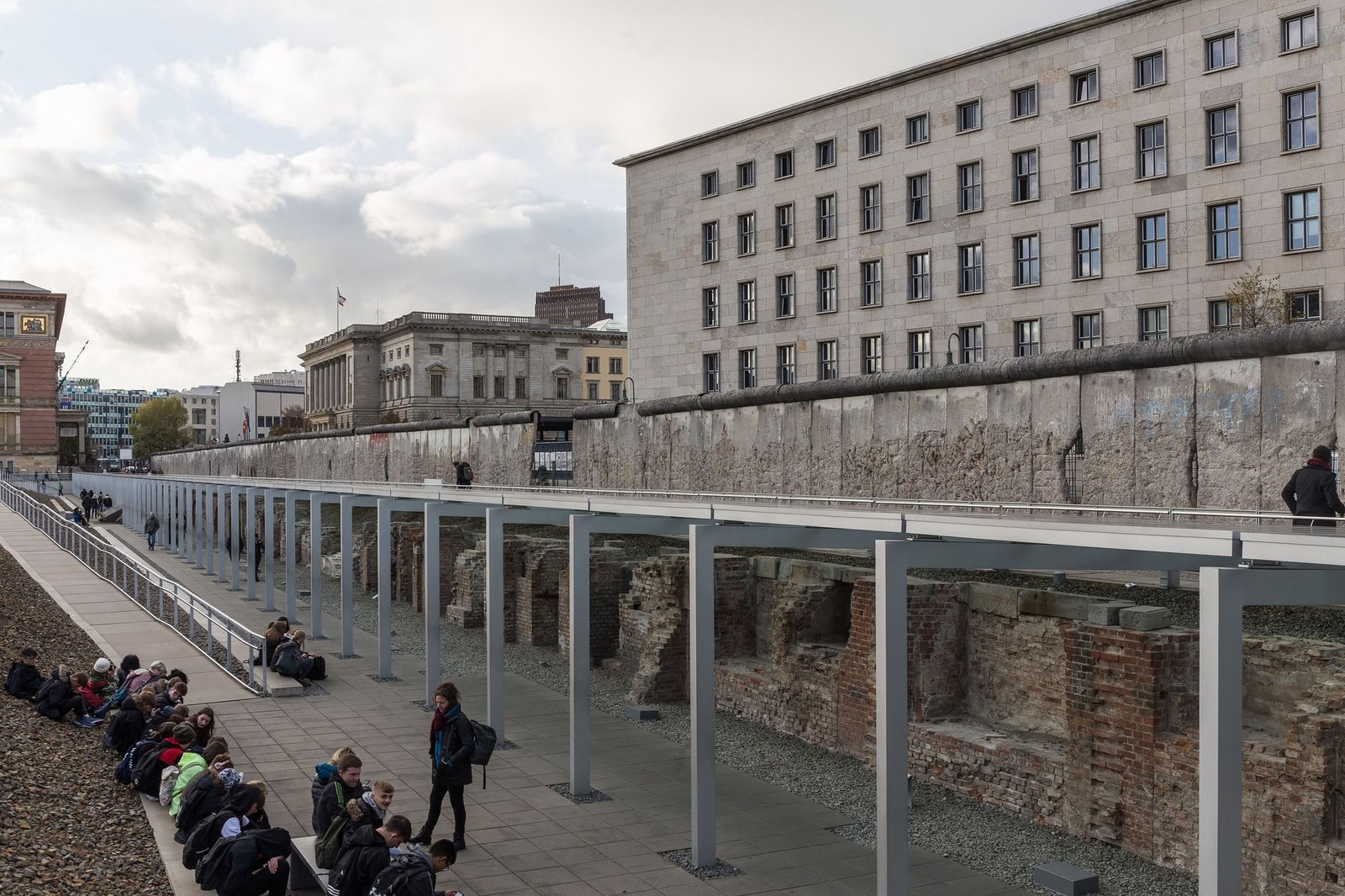
At 4.20 in the morning of 29 July 1965, East German border troops discovered that a family had gone over the Wall from the roof of their own government's ministries building.1 Heinz Holzapfel, his wife Jutta and their nine-year-old son had walked in with visitor passes, hidden in a toilet until the offices emptied, and crossed the border strip on a steel cable they had pulled across it themselves.1 The Stasi's report on the breakthrough reads like an engineering brief: line length, cable thickness, distance to the anchor point.
That is the kind of escape this article is about. The West Berlin police counted 5,075 people who got over the Berlin barriers between August 1961 and the end of 1989.13 (For what those numbers include, see how many people escaped the Berlin Wall.) A small minority of the escapes recorded on this site used something built or adapted for the job: a cable, a hiding place, armour plate, an aircraft.
The eleven entries below were chosen on three rules. Each happened at the Berlin Wall or the border around West Berlin. Each had a design that can be explained, whether it worked or not. And each is documented well enough to link to a sourced record. Where the sources disagree, the disagreement is in the text. For the full range of methods, see all escape methods. For the escapes dug underground, see the Berlin Wall escape tunnels.
1. The Holzapfel family's cable from the Haus der Ministerien (28 July 1965)
Heinz Holzapfel, an industrial economist from Leipzig, knew the Haus der Ministerien from business trips. The huge complex on Wilhelmstraße stood a few metres from the Wall, and he used his visits to study it. According to the Stasi, he got his family into the building on 28 July 1965 with passes he had kept from earlier visits and evidently altered.1
The family waited in a toilet on an upper floor until the building emptied, then went up to the roof. Holzapfel threw a nylon line of about 150 metres, weighted with a hammer, over the border strip to helpers waiting in the West (relatives, according to the Finance Ministry).15 They tied on a steel cable about 8 mm thick, which the family hauled back up; on the western side it was anchored to a lorry trailer 100 to 120 metres from the building.1 The record says the roof end went round a flagpole. The three slid down one after another on home-made pulleys and harnesses.1
The sources differ on details. The Federal Ministry of Finance, which occupies the building today, gives 28 July and has the family on the roof at 21:45; the Stasi report is headed 29 July because the escape was only discovered that morning, and puts them on the roof after 22:00. The ministry spells the son Günter, the Stasi Günther.151
How it worked: a throwing line light enough to clear the strip by hand, a steel cable pulled back along it, and a roof high enough above the western anchor for gravity to do the rest.
2. A bow, an arrow and a birthday: Bethke and Becker's cable (31 March 1983)
Eighteen years later, Holger Bethke and Michael Becker used the same principle in Treptow, where the death strip was narrow and tall houses stood on both sides. Holger's brother Ingo had fled in 1975 (the taz says 1974)54 and was waiting on the western side. On 31 March 1983, Holger's 30th birthday, the two men climbed into an attic.
Holger shot an arrow trailing nylon cord over the Wall. Ingo tied a steel cable to it, the pair pulled it back and fastened it, and Holger crossed on a home-made wooden pulley.5 Becker followed.
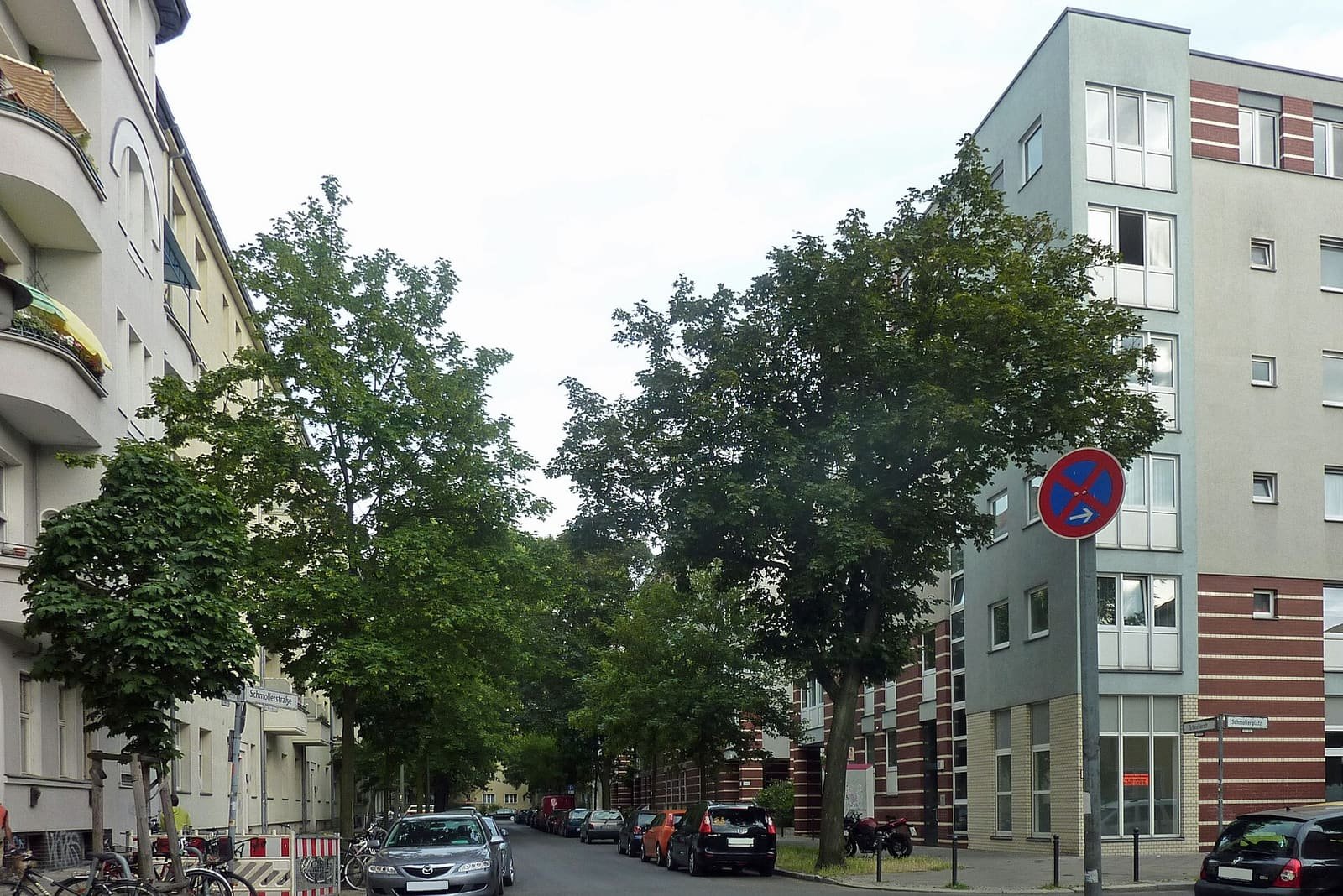
Here the accounts split. berlinwallmap.info says the cable was fixed to a chimney on the eastern house;5 English Wikipedia says Ingo tied the western end to his car and pulled it taut. The street is given as Schmollerstraße by Wikipedia and as the Lohmühlenstraße and Treptower Park area by berlinwallmap.info. No Chronik der Mauer entry for this escape has been found.
How it worked: a bow did the throwing, the West did the rigging, and an attic above the strip gave the slide its height.
3. Microlights with red stars: the Bethke brothers come back for Egbert (26 May 1989)
By 1989 only the youngest brother, Egbert, was still in the East. Ingo and Holger sold their pub in Cologne and bought two Ikarus C22 ultralight aircraft,5 at about 50,000 marks each according to the taz.4 They had them painted olive, with red stars.4
According to the taz, which drew on the brothers' statement to police, they took off at about 4.20 a.m. from a sports ground in Neukölln. About 20 minutes later they picked Egbert up on a meadow in Treptower Park near the Soviet memorial, then flew along the Wall at about 200 metres to the Reichstag and landed in front of it.4 berlinwallmap.info times the crossing at 4.15 a.m. and says the whole operation took under ten minutes.5 Wikipedia names Britzer Garten as the take-off site, and the sources disagree on whether one aircraft or both landed in the park.
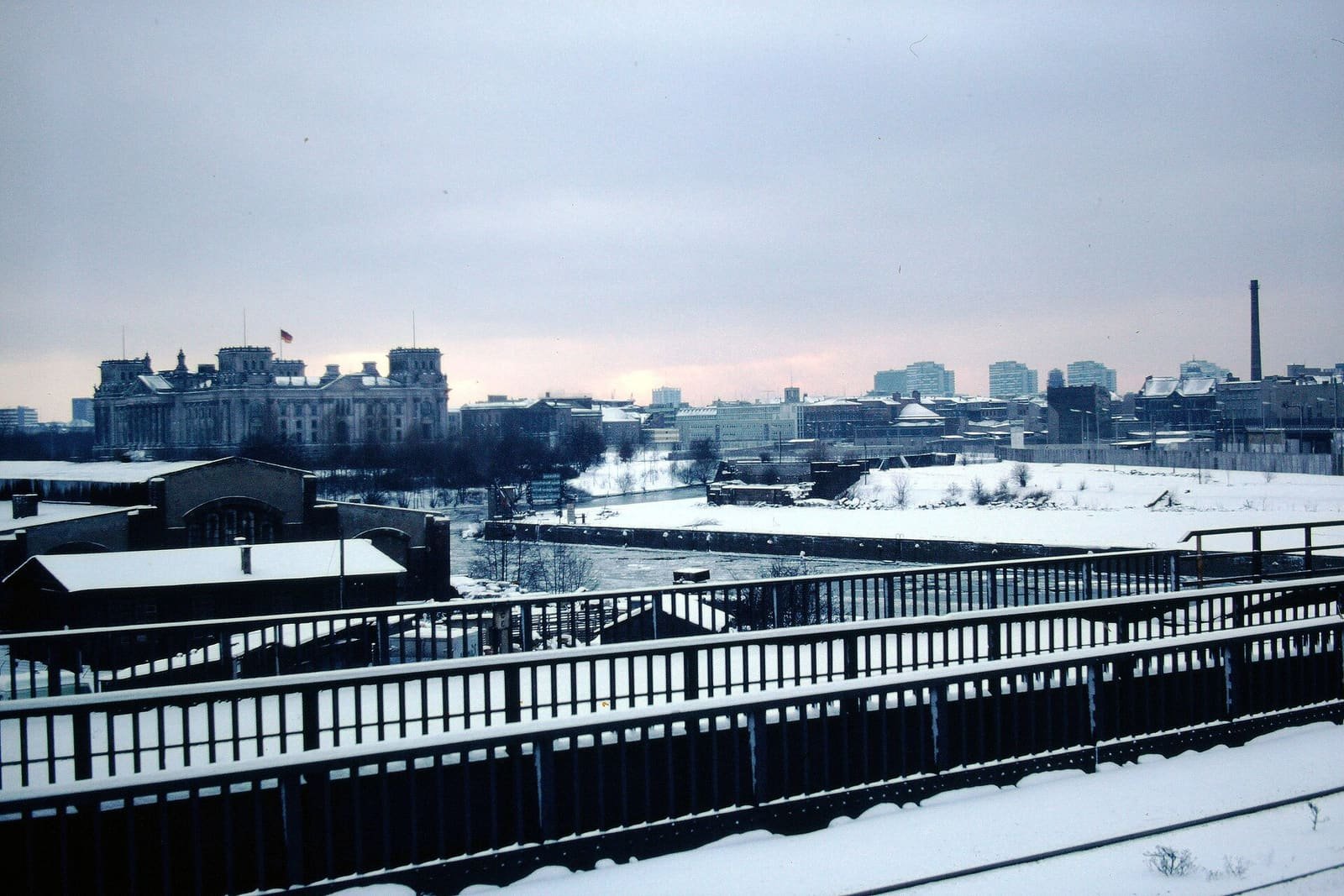
The brothers then sold their story and their own onboard video to the magazine Quick for a six-figure sum, and only went to the police 36 hours later.4 One family is responsible for two of the eleven entries here.
How it worked: an aircraft that could land on a park meadow, a pickup timed for first light, and paintwork chosen to confuse anyone who looked up.
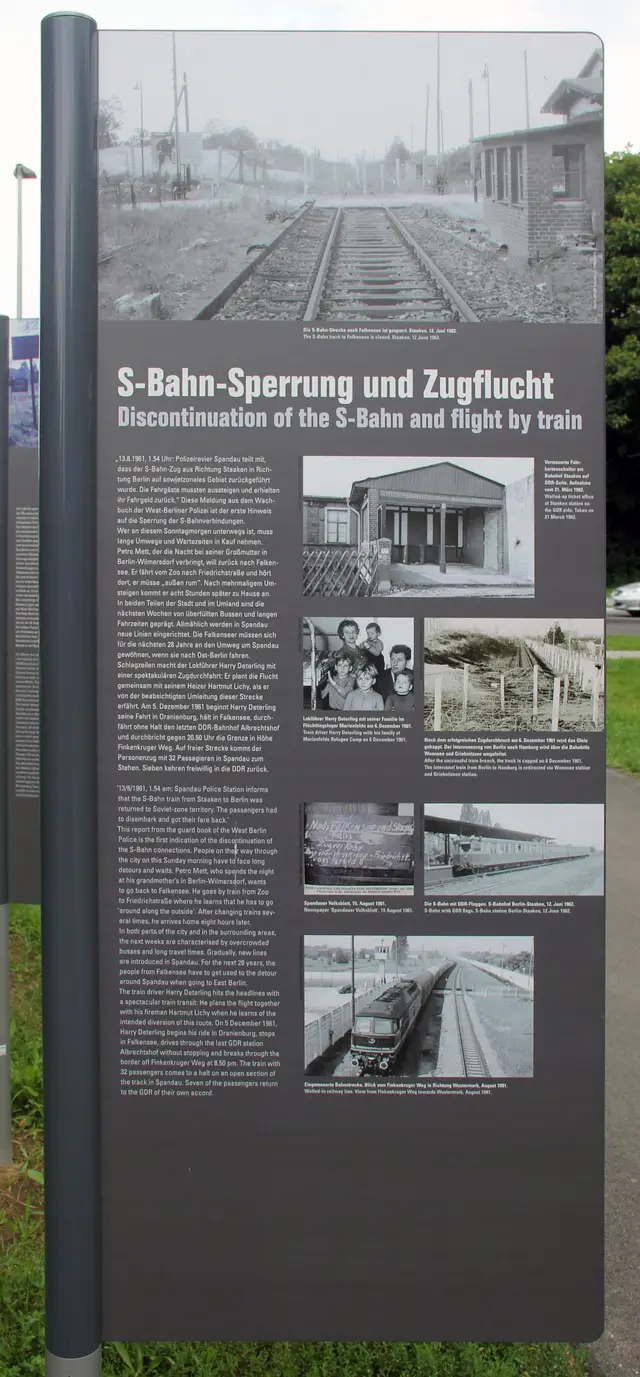
4. The last train to freedom: Harry Deterling (5 December 1961)
In December 1961 one railway line still ran from the GDR to Albrechtshof, the last East German station before Spandau. Engine driver Harry Deterling and his fireman Hartmut Lichy simply did not stop there. At about 20:50 on 5 December 1961 they took the passenger train on into West Berlin; no shots were fired.2 Deterling's wife and four children were on board, along with relatives and friends who knew the plan.
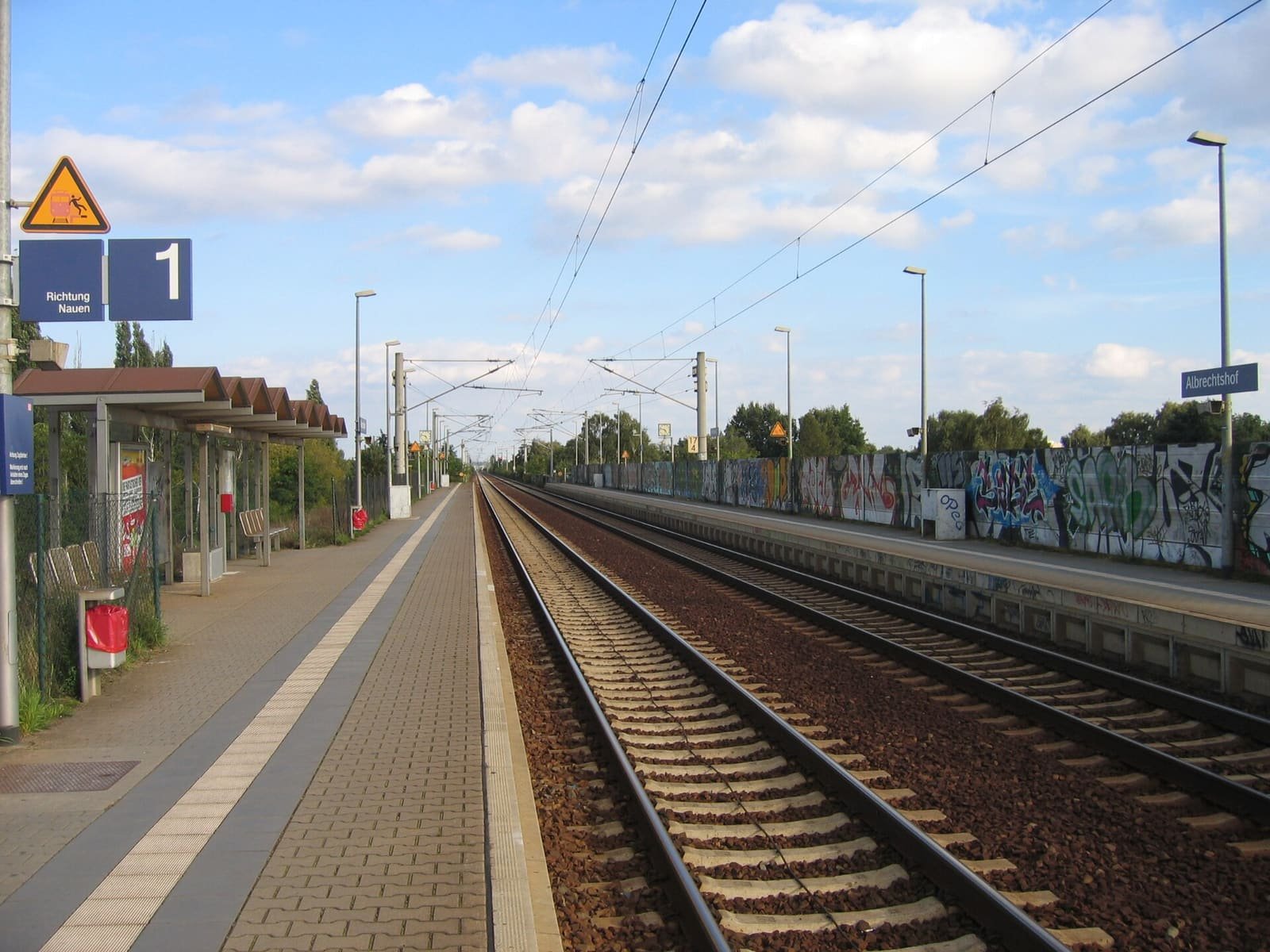
Not every passenger was in on it. The Chronik der Mauer says 25 people stayed in the West and seven went back voluntarily.2 The Stasi report (Information 758/61) counts about 50 on board, of whom about 30 plus the crew stayed and 19 returned. The line was cut the next day, and no train ever broke through the Berlin barriers again.2 More rail cases are under train escapes.
How it worked: a scheduled service on a line that still crossed the border, driven by the one person who decided where it stopped.
5. "The smallest escape vehicle ever": Klaus-Günter Jacobi's BMW Isetta (23 May 1964)
The BMW Isetta was 2.30 metres long and 1.40 metres wide.3 Klaus-Günter Jacobi cut an opening behind the bench seat and moved the parcel shelf up. He took out the spare wheel, the heater and the air filter, and swapped the 13-litre fuel tank for a 2-litre one.3 Into the space went his friend Manfred Koster, who crossed on 23 May 1964.3
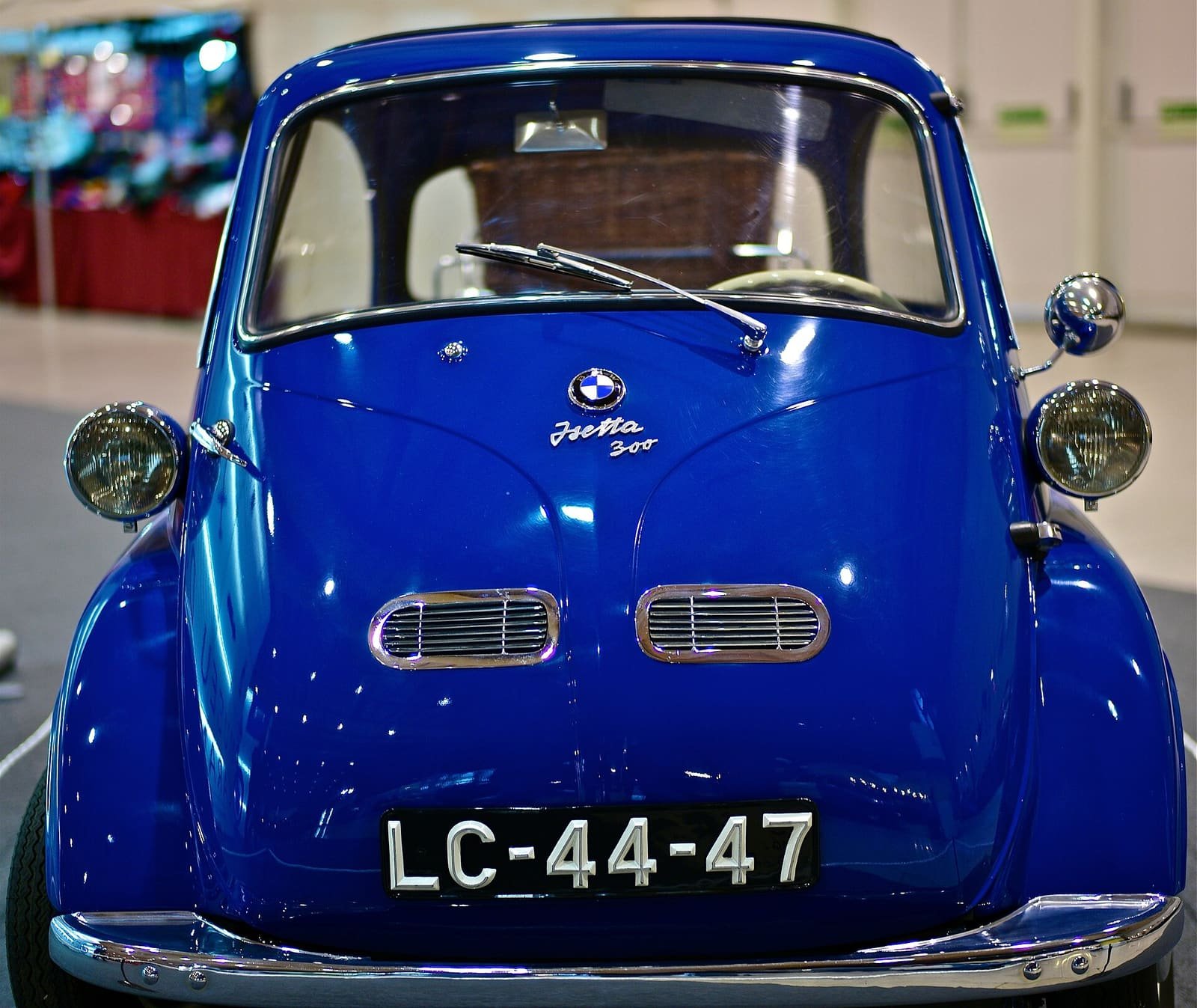
A second converted Isetta later brought out eight more people; it is now on show at the Mauermuseum at Checkpoint Charlie.3 The account rests mainly on BMW's own press material and on car magazines that drew on it, and none of them names the crossing point, so the Isetta is not on the map above. auto motor und sport gives the length as 2.40 metres.
How it worked: a tiny car stripped of everything a short drive didn't need, so that a person fitted where the spare wheel, heater and fuel tank had been.
6. Under the barrier: Heinz Meixner's Austin-Healey Sprite (5 May 1963)
Heinz Meixner, a 20-year-old from Linz in Austria, wanted to marry Margit Thurau, whose application to leave the GDR had been refused. As an Austrian he could cross Checkpoint Charlie, and on one trip by scooter he measured the barrier: a little under a metre high. English accounts give 95 cm, the Austrian OÖNachrichten 97 cm.
He hired a red Austin-Healey Sprite, took off the windscreen and let air out of the tyres; without its windscreen the car stood about 90 cm high. Margit hid behind the seats. Her mother went in the boot, behind bricks meant to stop bullets. Shortly after midnight on 5 May 1963 he drove slowly into the checkpoint, then accelerated, ducked and went under the last pole before the guards could fire. The GDR reinforced its barriers afterwards. "Now we can finally get married," Meixner said.
How it worked: a measurement taken in plain sight, and a car lowered until the barrier no longer stopped it.
7. A person behind the dashboard: the Veigel/Herschel Cadillac (1964–1967)
Burkhart Veigel's Cadillac DeVille, converted with Hasso Herschel, was used again and again. The hiding place was behind the dashboard, with room for an adult whose lower legs were bent into the right front wing.
How many people it carried is disputed. auto motor und sport gives about 200 between the end of 1964 and November 1967, and Veigel himself speaks of more than 200. The Stuttgarter Zeitung says about 120 refugees were hidden in three vehicles over the same years. No fetched source names the crossings used or says why the runs ended. Veigel's wider work is covered in the Berlin Wall escape helpers.
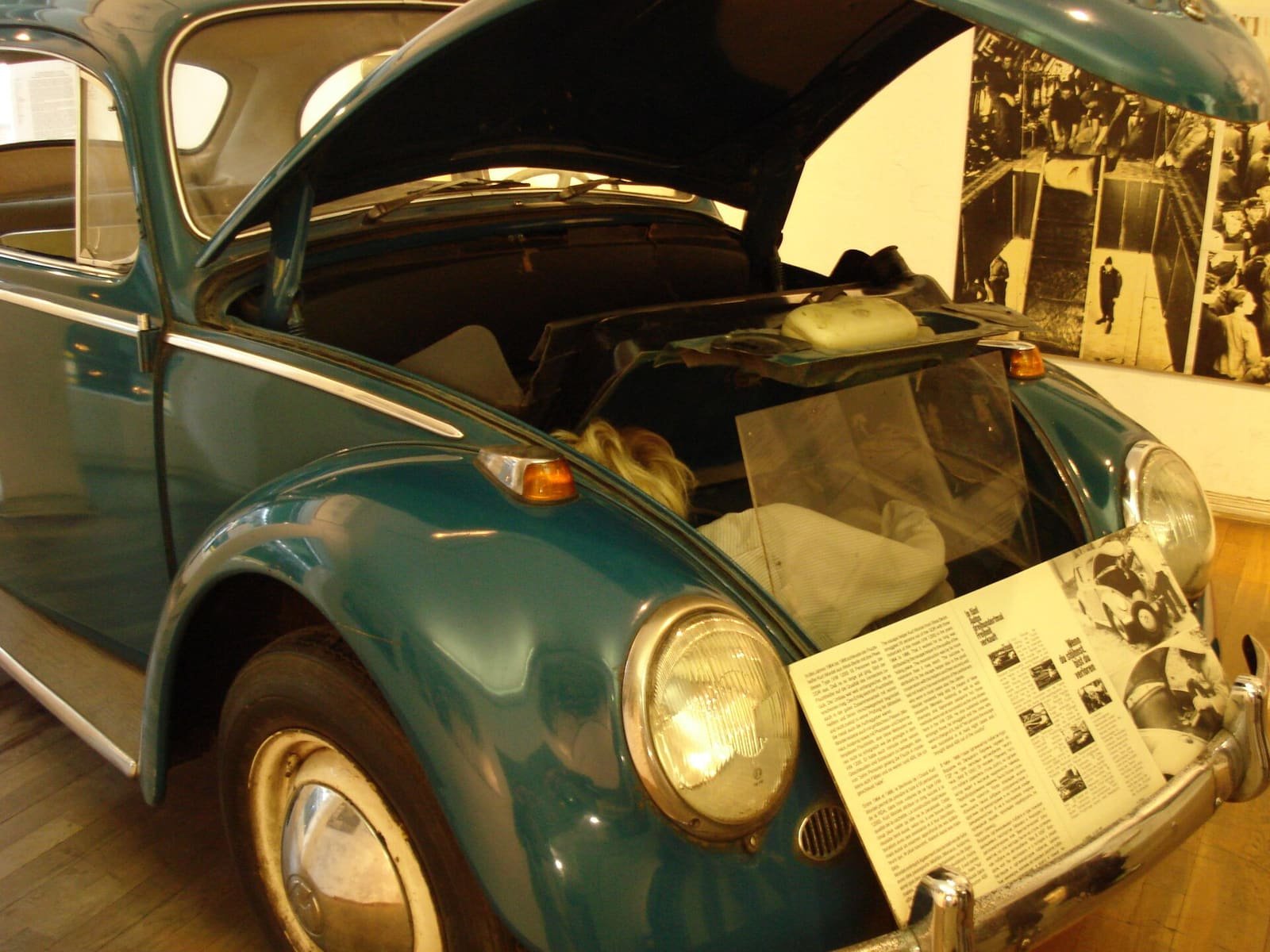
The Cadillac was the exception. Of the hidden-vehicle cases on this site, more failed than succeeded: a hiding place only had to be found once.
How it worked: a hiding place inside the car's own structure, reused for years because it was not found.
8. Hitch-hiking on the West's U-Bahn: Dieter Wendt (8 March 1980)
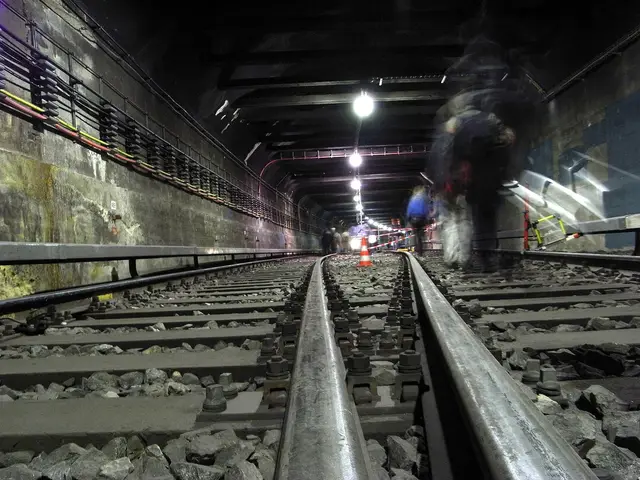
West Berlin's U8 line ran under East Berlin without stopping. Dieter Wendt, 28, was a signal mechanic with the East Berlin transport company and knew the tunnels. On 8 March 1980 he got off at the almost empty Klosterstraße station with his cousin, his cousin's wife and their two-year-old. The four jumped down from the platform and walked the 865-metre Waisentunnel, a connecting tube used only by rare works trains, to the U8.
Under the Spree, Wendt stopped a West Berlin train with his red signal lamp. The driver's answer: "Get in and lie down!" Shortly after 21:30 they crossed the border lying in the cab. All the sources for this escape come from one publishing house, the Berliner Zeitung and Berliner Kurier; German Wikipedia gives the date as 8 February 1980.
How it worked: a railwayman's knowledge of an unused tunnel, and a red signal lamp to stop a western train.
9. Armour: the Opel, the bus and the bulldozer
Three escapes turned ordinary vehicles into armoured ones.
On 14 November 1961 five East Berliners, three women and two men, drove a pre-war Opel P4 fitted with steel plates through the Chausseestraße crossing. About 100 shots were fired at it; the windscreen and a front tyre were hit, but all five reached West Berlin unhurt.7
On Boxing Day 1962 two families in a bus armoured with steel plates and fitted with a snowplough broke through all three barriers of the Drewitz control point and reached Dreilinden at about 5.30. Three bullets hit the bus; no one was hurt. According to t-online, they chose that crossing because its long approach let the bus build up speed.
On 11 September 1966 two couples and a three-year-old flattened the fences at Staaken with an 18-tonne bulldozer whose cab and injection pump were armoured with steel plates, leaving only small viewing slits. GDR soldiers fired nearly 60 rounds. A tree on West Berlin territory finally stopped the machine; two adults were grazed.8
The contrast is Wolfgang Engels, 19, a trained car mechanic and civilian army employee. On 17 April 1963 he drove a stolen armoured personnel carrier into the Wall between Treptow and Neukölln. It stuck. He was shot from about five metres and got over the Wall seriously wounded, covered by a West Berlin policeman's fire.6
Ramming worked in the early years and almost never later. Of the vehicle breakthroughs on this site, nearly all from the 1960s succeeded and nearly all from the 1980s failed, as the GDR hardened its crossings and the border strip.
How it worked: protect the driver and the engine, keep the speed up, and choose a crossing where the barriers could still be broken.
10. Hijacking the excursion steamer "Friedrich Wolf" (8 June 1962)
Thirteen young East Berliners and a baby got the crew of the excursion ship "Friedrich Wolf" drunk and locked them below deck.9 At about 5.05 a.m. on 8 June 1962, roughly 400 metres before the Oberbaumbrücke, the ship swung hard into the Landwehrkanal and West Berlin.9 Three GDR border boats gave chase. The Chronik der Mauer counts 135 shots, twelve of which hit the western side;9 the Tagesspiegel, citing the Stasi, gives 138. West Berlin police returned fire, and everyone got ashore unhurt.
Afterwards East Berlin's passenger ships were guarded at night and their steering wheels removed.9 The site is covered under the Spree in Kreuzberg and Friedrichshain.
How it worked: a ship already sailing on a border river, a crew put out of action, and a sharp turn into a canal that led straight into West Berlin.
11. Under the radar to RAF Gatow (15 July 1987)
Thomas K. was 18 and on only his second solo flight when he took a single-engine plane from an airfield south of Potsdam on 15 July 1987. He flew under all Soviet and East German radar and landed at the British airfield at Gatow.10 British personnel handed the dismantled aircraft back on the Glienicke Bridge on 5 August 1987.10 This escape rests on a single source, the Chronik der Mauer.
How it worked: a light aircraft flown below the radar, and a British airfield inside West Berlin to land on.
- Reached the West
- Some got through
- Stopped
- Killed
- Driving through4021 reached the West · 1 some got through · 17 stopped · 1 killed
- Hidden in vehicles3110 reached the West · 2 some got through · 18 stopped · 1 killed
- False papers and disguises2214 reached the West · 8 stopped
- By train156 reached the West · 1 some got through · 4 stopped · 4 killed
- Aircraft and balloons115 reached the West · 4 stopped · 2 killed
- By boat64 reached the West · 2 killed
- Ziplines and cables33 reached the West
Clever, but it failed
Ingenuity didn't guarantee anything. The "Trojan cow", a hollow model bull in a wooden crate, had already carried people west twice when it was found at the Drewitz crossing on the evening of 7 July 1969. The helpers got more than three years; the 28-year-old woman inside was sentenced to two years and ten months before West Germany bought her free.11
In October 1984 two young men carried two home-built hang gliders onto a Leipziger Straße tower block, after changing the lock on the roof door, but gave up because of the wind. Two years later Volkmar Kienöl and Klaus Kuschmierz launched from a roof on the same street and came down short of the Wall. In March 1989 Winfried Freudenberg crossed into West Berlin in a home-made gas balloon and was killed when it came down; his story is told on Victims of the Wall. All air escapes are listed under aircraft and balloons.
What about the balloon?
The best-known balloon escape of the Cold War is often filed under the Berlin Wall, but it had nothing to do with Berlin. On 16 September 1979 the Strelzyk and Wetzel families, eight people in all, took off in a home-made hot-air balloon from a forest clearing near Oberlemnitz in East Germany and landed near Naila in Bavaria, about 10 km from the border. They crossed the inner-German border, not the Wall around West Berlin.12
Another famous story is usually told differently from its only first-hand source. Circus artiste Horst Klein climbed along a high-voltage line over the Teltow Canal on the night of 27 December 1962. According to Werner Grützmann, one of the West Berlin firemen called out that night, Klein lost his strength and fell onto the eastern bank; the firemen rowed across in a rubber dinghy and brought him back.
See the places
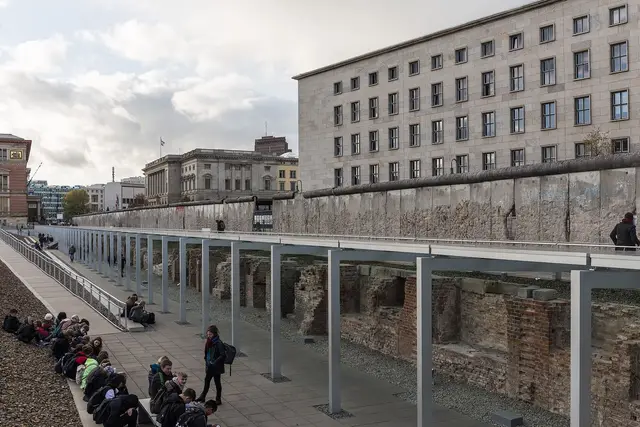
Several of these sites are close together. The Haus der Ministerien, today the Detlev-Rohwedder-Haus and home of the Federal Ministry of Finance, stands on Wilhelmstraße behind the surviving stretch of Wall on Niederkirchnerstraße. Checkpoint Charlie is a short walk east, and the Bethkes' landing site at the Reichstag is covered under Brandenburg Gate and Reichstag. The Engels and Bethke sites are in Treptow and Neukölln. For a route that links many of them, see the Berlin Wall escape sites walking tour.
Berlin Experiences has published a shorter round-up, Eight Strangest Berlin Wall Escapes, which also covers a coach at Checkpoint Charlie, a rowing escape and a tunnel dug by pensioners.14
Questions and answers
- What was the most creative Berlin Wall escape?
- There is no official ranking, but the Holzapfel family's cable slide from the roof of the Haus der Ministerien in July 1965 is among the best documented: a Stasi report describes the hammer-weighted nylon line, the steel cable of about 8 mm and the home-made pulleys and harnesses. Other contenders are Harry Deterling's train in 1961, the BMW Isetta of 1964 and the Bethke brothers' microlights in 1989.
- Did anyone escape the Berlin Wall on a zipline?
- Yes. The Holzapfel family slid on a steel cable from the roof of the Haus der Ministerien on 28 July 1965, and on 31 March 1983 Holger Bethke and Michael Becker crossed on a cable after shooting a line over the border strip with a bow and arrow.
- How did someone escape the Berlin Wall in a BMW Isetta?
- On 23 May 1964 Manfred Koster crossed hidden in a converted Isetta about 2.3 m long. Klaus-Günter Jacobi had cut an opening behind the bench seat, removed the spare wheel, heater and air filter and replaced the 13-litre fuel tank with a 2-litre one to make room for him.
- Was the hot-air balloon escape over the Berlin Wall?
- No. The Strelzyk and Wetzel families' balloon flight of 16 September 1979 took off near Oberlemnitz and landed near Naila in Bavaria, so it crossed the inner-German border. The balloon escape at the Berlin Wall was Winfried Freudenberg's gas balloon in March 1989, and he died when it came down in West Berlin.
- Did anyone escape the Berlin Wall by train?
- Yes. On 5 December 1961 engine driver Harry Deterling and fireman Hartmut Lichy drove a passenger train through Albrechtshof, the last East German station, into West Berlin. The line was cut straight afterwards, and no train ever broke through the Berlin barriers again.
Sources
- Grenzdurchbruch am Haus der Ministerien in Berlin-Mitte (Einzelinformation Nr. 731/65)Stasi-Unterlagen-Archiv, DDR im Blick
- Letzter Zug in die Freiheit: gelungene Flucht mit einem Dampfzug von Albrechtshof nach West-Berlin, 5. Dezember 1961Chronik der Mauer
- Mit der BMW Isetta in die FreiheitBMW Group PressClub
- Flucht zur West-Marktaz
- Flucht der Brüder BethkeBerliner Mauer Karte (berlinwallmap.info)
- Gelungene Flucht mit einem gestohlenen Panzer von Berlin-Treptow nach Neukölln, 17. April 1963Chronik der Mauer
- Gelungene Flucht mit einem gepanzerten Vorkriegs-Opel über den Grenzübergang Chausseestraße, 14. November 1961Chronik der Mauer
- Flucht mit einer Planierraupe von Staaken nach Spandau, 11. September 1966Chronik der Mauer
- Gelungene Flucht mit dem Fahrgastschiff "Friedrich Wolf" am Osthafen, 8. Juni 1962Chronik der Mauer
- Gelungene Flucht mit einem Motorflugzeug von Potsdam nach Berlin-Gatow, 15. Juli 1987Chronik der Mauer
- Gescheiterte Flucht in einer "Trojanischen Kuh", 7. Juli 1969Chronik der Mauer
- East Germany balloon escapeWikipedia
- Gelungene Fluchten aus der DDR und Ost-Berlin durch die Grenzsperranlagen 1961–1989Chronik der Mauer
- Eight Strangest Berlin Wall EscapesBerlin Experiences
- Die Flucht der Familie Holzapfel (text version)Bundesministerium der Finanzen
Facts taken from an escape record on this site link to that record, which lists its own sources.
Spotted an error, or know more? Email us a correction or addition
Escapes in this article
28 July 1965 – 29 July 1965
The Holzapfel family's cable slide from the Haus der Ministerien
A Leipzig family hid in the East German government's Haus der Ministerien, climbed onto its roof after dark and slid on a steel cable over the Wall into West Berlin.
5 December 1961
The last train to freedom
Locomotive driver Harry Deterling drove a passenger train at speed through the terminus at Albrechtshof and across the border into West Berlin.
23 May 1964
Smuggled out in a BMW Isetta
Klaus-Günter Jacobi hid his friend Manfred Koster in a modified BMW Isetta, the smallest car ever used for an escape; a student friend drove it across the border into West Berlin.
5 May 1963
Under the barrier in an Austin-Healey Sprite
An Austrian, Heinz Meixner, drove a low-slung Austin-Healey Sprite with its windscreen removed under the barrier at Checkpoint Charlie, carrying his fiancée and her mother hidden in the car.
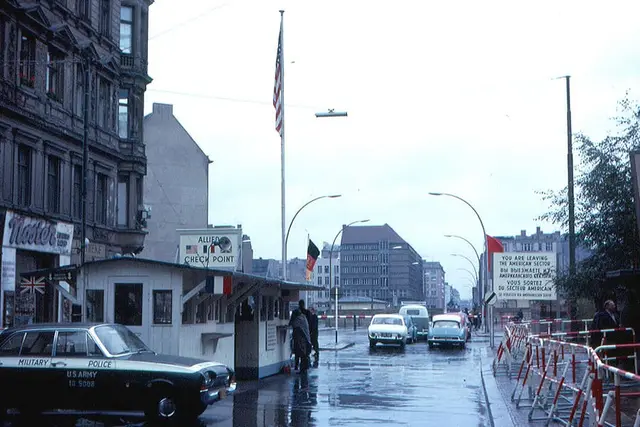
26 May 1989
Ultralight flight from Treptower Park to the Reichstag
Two brothers who had already fled flew ultralight aircraft from West Berlin to Treptower Park at dawn; one landed to pick up their youngest brother Egbert, and both aircraft came down in front of the Reichstag.
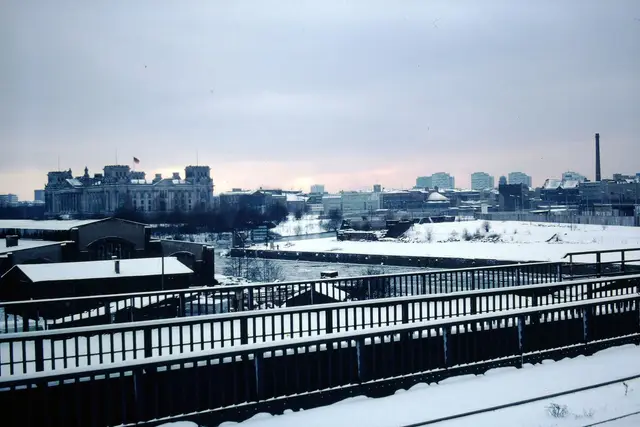
8 June 1962
The excursion ship "Friedrich Wolf"
Young East Berliners commandeered the passenger steamer "Friedrich Wolf", locked up its crew and swerved under heavy fire into West Berlin's Landwehrkanal.
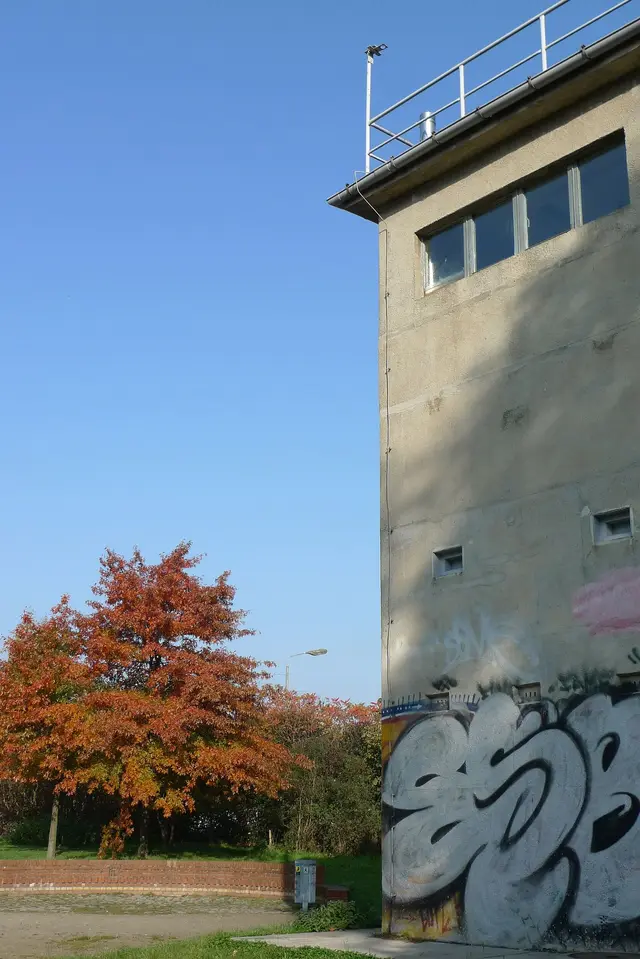
11 September 1966
Bulldozer through the Staaken border
Two married couples and a three-year-old child flattened the Staaken border fences with an armoured 18-tonne bulldozer until a tree stopped them in Spandau.
8 March 1980
Hitch-hiking on the U8
An East Berlin U-Bahn signal mechanic led three relatives through a disused connecting tunnel to the West Berlin U8 line, stopped a western train with his signal lamp and asked for a lift.
More articles
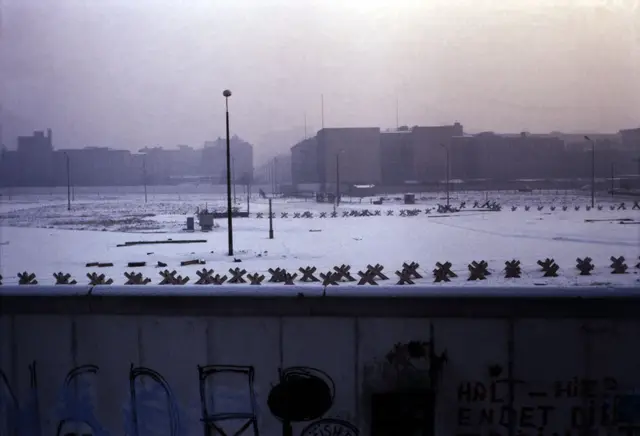
The numbers
How Many People Escaped the Berlin Wall?
The figure of 5,075 comes from a West Berlin police count. Here is where it comes from, how it fell year by year, and what several hundred documented escapes add to it.
Tunnels
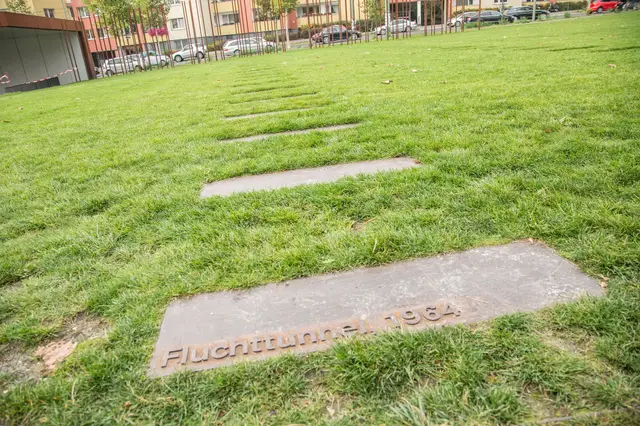
The Tunnels Under the Berlin Wall: Who Dug Them, Who Got Out
Students dug in from the West, families dug out from the East, and the Stasi waited at the far end of many. How the tunnels worked, why most failed, and where you can still see one.
Walking tour
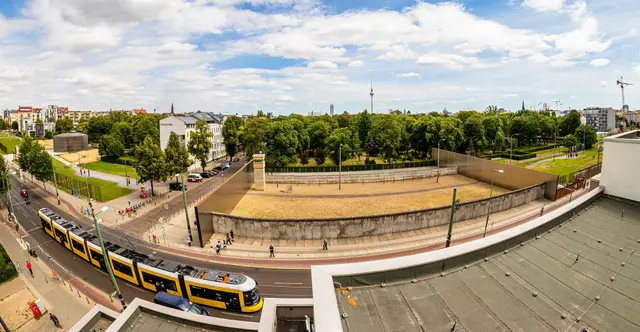
Walking the Berlin Wall Escape Routes: A Self-Guided Tour
Two walks and two short add-ons, built from the dated escapes on this site. Each stop says what happened within a few hundred metres, what you can still see there, and how far it is to the next one.