24 October 1984 · Aircraft and balloons
Two hang gliders on a tower-block roof in the Leipziger Straße
Two young men carried two home-built hang gliders up to the roof of a Leipziger Straße tower block, changed the lock on the roof door and tried to launch towards West Berlin. The wind was wrong, they gave up and fled, leaving the gliders behind.

A Stasi dossier of May 1985 on thwarted escapes by balloon and home-made aircraft describes two young East Berliners, a 22-year-old construction machine operator and a 20-year-old electronics technician, who spent 1983 studying technical literature in libraries, doing calculations and finishing a design for a hang glider. They stole the materials: fabric from a department store and high-quality aluminium tubes from a metal trader.
Over several weeks they built two gliders in a disused spa house and scouted areas in the south of the GDR for test flights, using stolen maps. In August and September 1984 they made trial flights in front of onlookers, claiming they were testing equipment for the GST, the paramilitary sports organisation. One glider was damaged and quickly replaced.
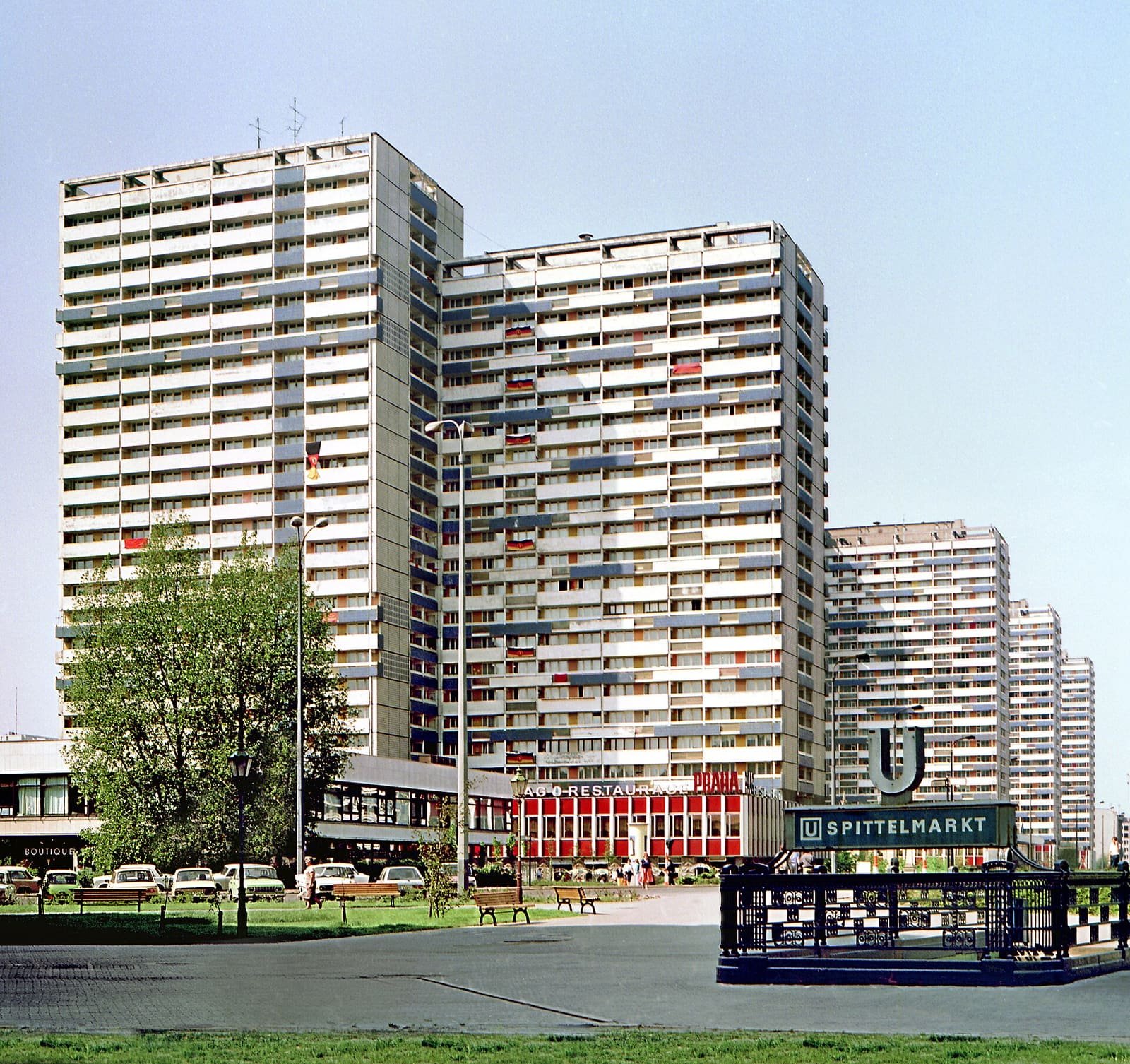
They then reconnoitred the high-rise blocks on the Leipziger Straße in Berlin-Mitte. On 9 October 1984 they forced the security lock of a metal door leading to the roof garden of one of the blocks and replaced it with a lock of their own, so that nobody would discover them. They carried the dismantled gliders up to the roof and assembled them.
On 24 October 1984 they tried to take off, but because of the wind conditions they abandoned the attempts. Fearing discovery, they left, leaving the gliders on the roof above the lift housing. People's Police officers found the two gliders the next day; a GDR-wide search followed and the Stasi identified the pair on 30 October 1984. The Stasi's photographs include a view from the roof across the border strip, with its inner and outer walls and watchtowers, to the Springer building in West Berlin, marked as the 'possible direction of flight'.
Sources
- Dokumentation spektakulärer Fluchtversuche mit Hilfe von Fluggeräten (ZKG, Mai 1985; BArch, MfS, AGM, Nr. 357), Blatt 85Stasi-Unterlagen-Archiv (Stasi-Mediathek)
- Dokumentation spektakulärer Fluchtversuche mit Hilfe von Fluggeräten, Blatt 87 (photos from the roof)Stasi-Unterlagen-Archiv (Stasi-Mediathek)
Spotted an error, or know more about this story? Email us a correction or addition
Related escapes
27 October 1984
A window cleaner's hang glider, carried to night practice by public transport
A 26-year-old glass and building cleaner built two hang gliders, practised at night on the edge of Berlin and scouted the Leipziger Straße tower blocks as a launch site. A neighbour's tip about glider parts in an attic led to his arrest.
19 November 1986
Volkmar Kienöl and Klaus Kuschmierz try to glide to the Springer building
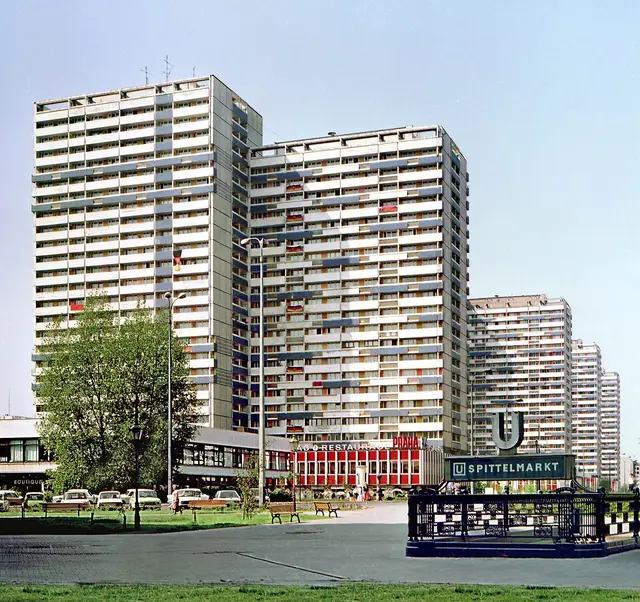
Two young men spent a night on the roof of a Leipziger Straße tower block beside two home-made hang gliders, planning to land in front of the Axel Springer building in West Berlin just 200 metres away. They came down short of the Wall.
20 December 1986
Failed motorised hang-glider escape near Potsdam
A 37-year-old toolmaker took off in a home-built motorised hang glider towards West Berlin, but darkness, cold and disorientation forced him down in the GDR.
8 March 1989
Winfried Freudenberg's fatal gas balloon flight
The last person to die at the Berlin Wall: Winfried Freudenberg crossed into West Berlin in a home-made natural-gas balloon but was killed when it came down in Zehlendorf.