The Collapsed Tunnel under Wollankstraße Station
Students tried to dig from the bricked-up arches beneath Wollankstraße S-Bahn station into East Berlin, but the tunnel collapsed under the platform and was discovered before anyone could escape.
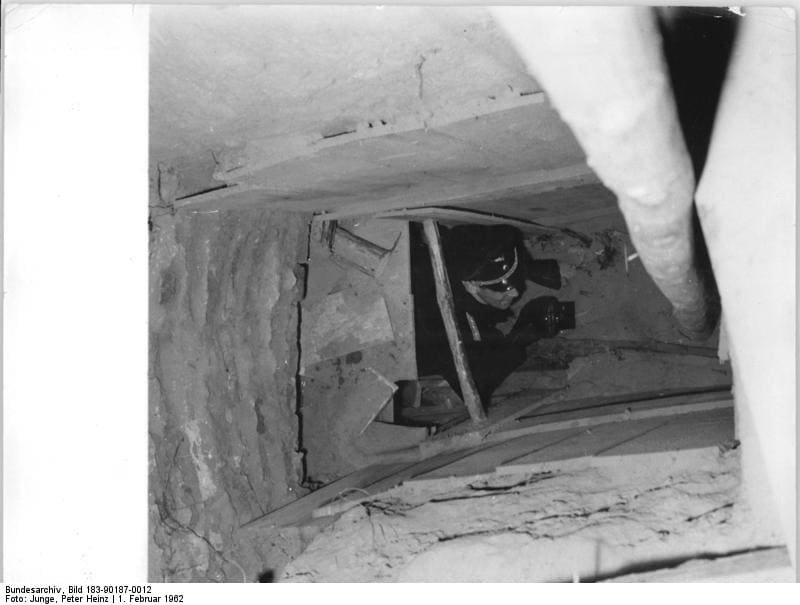
The elevated S-Bahn station Wollankstraße lay on East Berlin territory but could only be reached from the West. Its brick arches beneath the tracks had been walled up. A group made up mostly of students of the Technical University, joined by the brothers Boris and Eduard Franzke, planned to dig from these arches to the back of a building on Schulzestraße in East Berlin to bring out friends and relatives.
The diggers sank a shaft about two metres deep, where groundwater already appeared, and drove the tunnel eastward, shoring it with boards and timber. Only a few metres in, part of the roof caved in; one digger was cut off by falling sand but was not buried.
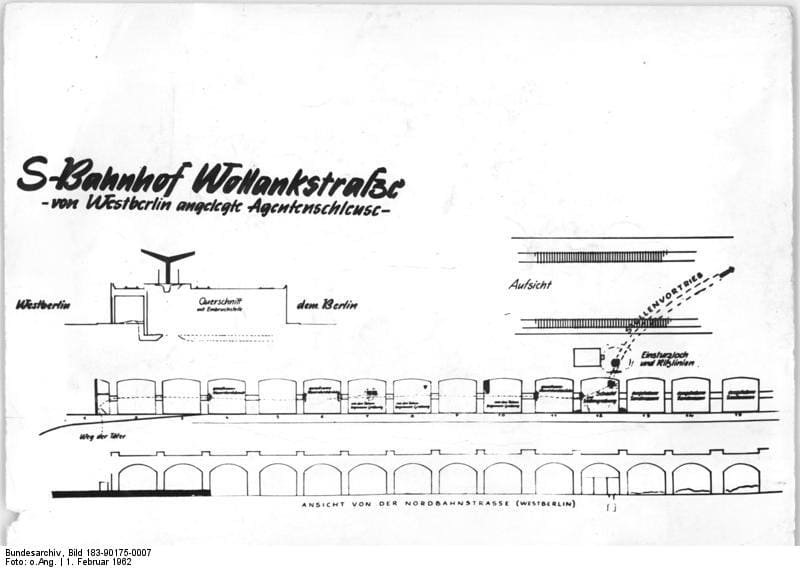
In late January 1962 the supports failed under the constant vibration of passing trains and a circular depression formed in the platform above. Railway staff investigated, East Berlin police opened the arches and found the tunnel entrance. The diggers had already left. The GDR used the find for propaganda, showing the tunnel to the international press on 1 February 1962. No one escaped through it.
Sources
- Tunnel am S-Bahnhof WollankstraßeTF-Mapping (Institut für Europäische Ethnologie, Humboldt-Universität Berlin)
- Fluchttunnel WollankstraßeWikipedia (de)
Spotted an error, or know more about this story? Email us a correction or addition
Related escapes
14 November 1962
The Kleinmachnow Tunnel and the Arrest of Harry Seidel
The betrayal of a 70-metre tunnel into Kleinmachnow ended with the capture of the famous escape helper Harry Seidel, who was sentenced to life imprisonment in a show trial.
7 August 1962
The Betrayed Kiefholzstraße Tunnel
Several escape-helper groups joined forces on a tunnel to a small house on Kiefholzstraße for a planned mass escape, but a Stasi informer among the couriers betrayed it and dozens of would-be refugees were arrested.
14 September 1962 – 15 September 1962
Tunnel 29
Around 30 helpers, mostly students, dug a tunnel from a factory on Bernauer Straße to a cellar in East Berlin; 29 people escaped through it over two days while an American TV crew filmed.
19 December 1961
The Pankow Cemetery Tunnel
A young East Berlin bride, separated from her West Berlin husband by the Wall, crawled to freedom through a short tunnel whose entrance was hidden behind a gravestone.